On the gloriously sunny morning of July 5 2024, Keir Starmer walked into Downing Steet as prime minister for the first time, having won a stonking 174-strong majority in the general election the day before. On a similarly warm morning a little less than two years later, he has been forced to stand outside Number 10 and announce his resignation. How did it come to this?
The resignation speech, marked with pathos and dignity, was particularly surprising because, as the prime minister made clear, he had built up a substantial record, doing the kind of things Labour leaders are meant to do.
The minimum wage has increased, employment rights for workers have been enhanced, waiting lists in the NHS have come down, half a million children are being lifted out of poverty, and the economy has grown in difficult times (albeit at sluggish rate). On the controversial issue of immigration, the numbers have come down.
For his supporters, Starmer is an unshowy but decent man approaching his job with proper seriousness and with a feeling for the national interest. Yet on the doorstep, MPs found that the response to Starmer was often one of visceral hatred. His polling numbers plummeted, amid complaints that his promise to deliver “change” in 2024 had not materialised.
Prime ministers in the past have often endured periods of unpopularity. In 1980-81, Margaret Thatcher was deeply unpopular and yet went on to win two further general elections. Yet this moment feels different – which explains why Starmer felt he had to go.
Despite its huge majority, the government was never that popular. It won because of the huge unpopularity of the Conservatives in office, especially after the debacles of the Boris Johnson and Liz Truss premierships. Starmer’s victory came off the back of a remarkably slim vote share of 33.7% in an election with a near-historically low turnout.
‘No such thing as Starmerism’
The new government appeared rudderless because it never established a compelling vision for the country. The prime minister is on record as saying: “There is no such thing as Starmerism and there never will be!”
Starmer’s approach was serious but technocratic, showing no interest in ideas or principles. This left it looking out of touch when confronted by populist movements of the right (Nigel Farage’s Reform UK) and the left (Zack Polanski’s Greens), who established a strong emotional connection with voters. Starmer has offered a centrist government at a time when the energy in politics is flowing away from the centre.
The government ran into trouble right from the start. It allowed itself to be defined by the decision to cut winter fuel payments for all but the poorest pensioners. This showed a complete lack of awareness of the politics of this move, which landed badly with voters.
Not long after this, it attempted to slash the spiralling welfare bill. On both issues it was forced into humiliating U-turns, which became the signature of the government. If this were not bad enough, the decision to appoint Peter Mandelson as ambassador to Washington proved catastrophic once the revelations from the Jeffrey Epstein files were made public. Starmer, who had attempted to build a reputation for honesty and integrity, looked incompetent.
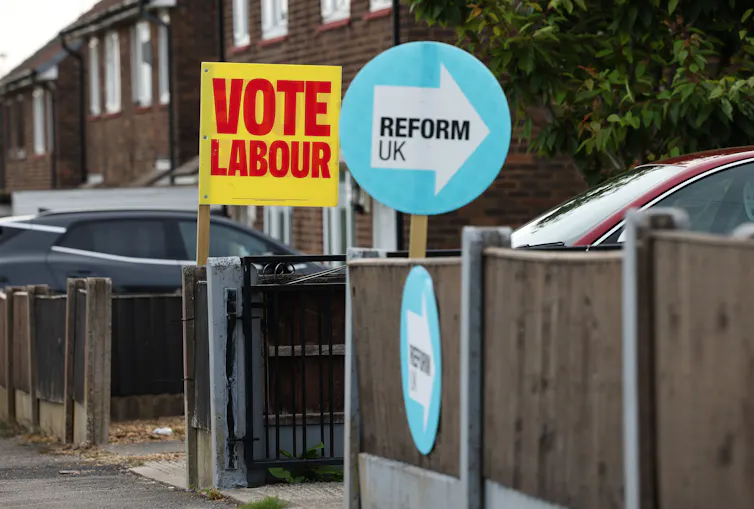
The prospect of a Reform government was the motivating factor to many Labour MPs who dropped support for Starmer. EPA/ADAM VAUGHAN
But the big issue for voters was the cost of living, even though the government had tried to combat in-work poverty through the minimum wage and employment rights. The reality for many voters though was that nothing much had changed and people felt they were still living in an age of austerity.
This partly explained the local election results in England in May 2026 when Labour won only 17% of the vote, while Reform UK achieved 26%. Labour lost the Senedd in Wales for the first time, to Plaid Cymru. Welsh Labour came third, and leader Eluned Morgan lost her seat.
The prospect of a Reform government was the threat that alarmed Labour MPs and pulled the rug from under Starmer. Andy Burnham’s victory in Makerfield (where Reform had won most of the council seats in May) suggested that he could bring voters back to the party.
Labour governments also suffer the polarising effects of a predominantly right-wing British media landscape. This often feeds on a sense of grievance and alienation, promoting resentment against immigrants and an “out-of-touch” elite. It appeared that Starmer wanted people to see issues in a complex and nuanced way in order that thoughtful solutions would emerge.
But that world may now be ceasing to exist. Voters increasingly want to see politics make an immediate difference. Many seem not to have heard of the work done on employment and health, among other matters. Some think that crime and immigration are going up, whereas the reverse is true. Starmer’s technocratic approach was always going to struggle in an age of populism.
How will historians view Starmer? A lot depends on what comes next. Should Labour renew itself in government (which is never an easy thing to do) then he will be seen as someone who remade Labour as a governing party and grappled with complex problems at home and abroad. He has fared better on the international stage than at home. Globally, he has maintained support for Ukraine, recognised a Palestinian state and kept the UK out of Trump’s war in Iran.
Should Reform UK win the next general election, Starmer will be seen as having ushered in a Farage government. His resignation speech revealed him as an honest leader who attempted to serve his country with seriousness and a desire to enhance the common good. Starmer has always been clear that it would take ten years to turn Britain round. His tragedy is that he got only two.
 Instagram Engineering
 Shopify Engineering