Continuing on from the previous series that began with Embodying the Nervous System.
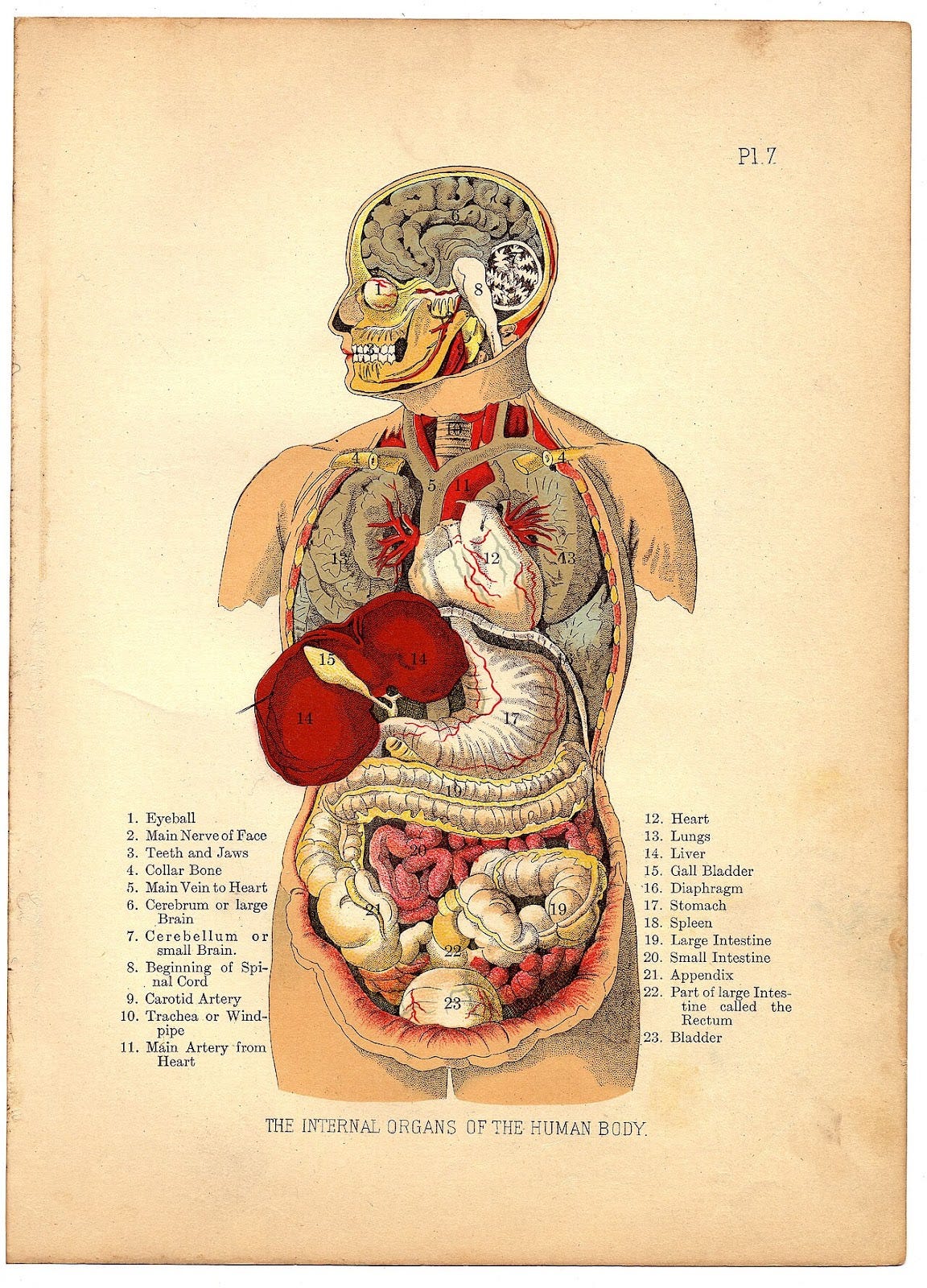
In your skull, there is a large organ that we call the brain. For the last hundred years, we have privileged it as the focal point for investigation into human nature and behavior.
Exercise
If you close your eyes, and point to where you feel you are in your body, where do you point? Do you have a focal point?
Most of us locate ourselves in our head, somewhere behind the eyes.
Much of the neuro-centric cognitive revolution that started with Minsky and Chomsky with the first ENIAC still dominates many of the human sciences. Cognitive Behavioral Therapy, Melzack’s neuromatrix model of pain, even Pain Reprocessing Therapy — all have this (in my view undue) emphasis on the brain.
Is human consciousness in the brain? We may also ask: Is flight in the wings of the bird?
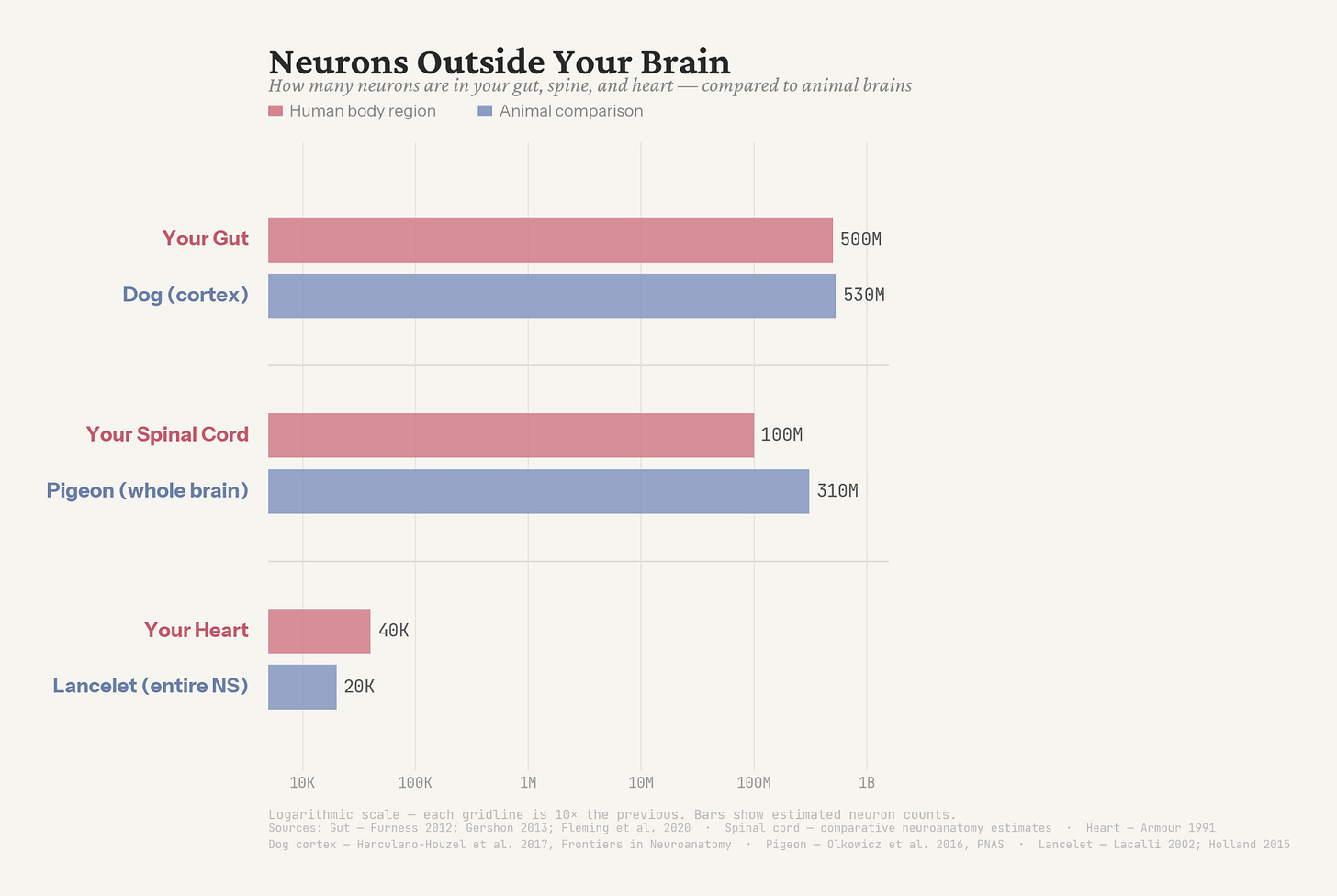
Yet if you look closely at our nervous system, you’ll see that there are neuronal clusters distributed throughout the body. Human computation is better understood as distributed than centralized.
[
](https://substackcdn.com/image/fetch/$s_!GsxB!,f_auto,q_auto:good,fl_progressive:steep/https%3A%2F%2Fsubstack-post-media.s3.amazonaws.com%2Fpublic%2Fimages%2Ff7a480d7-8ce9-4f37-845d-ffb5762b06bc_2048x1373.png)
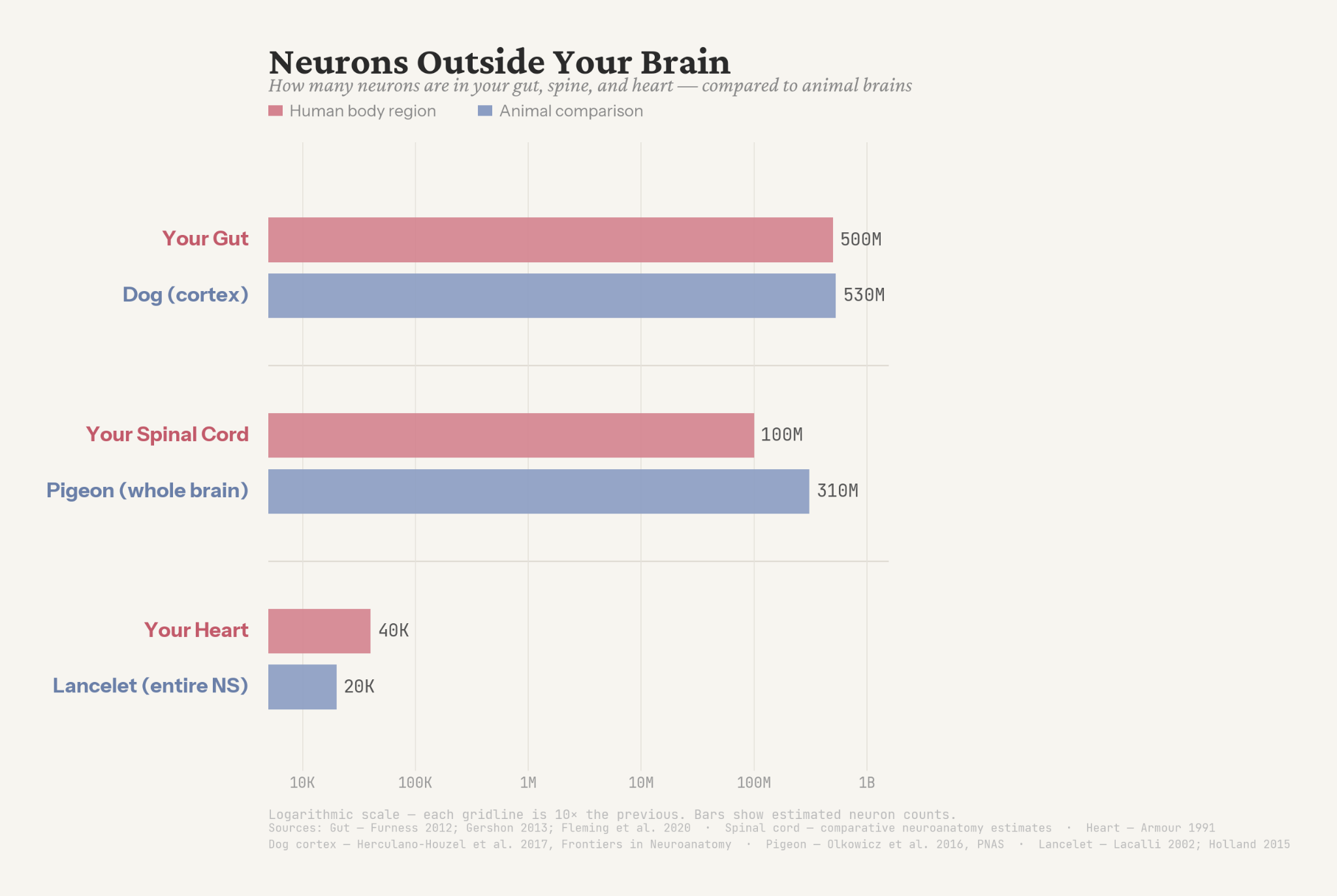
Graphic generated by Opus 4.6
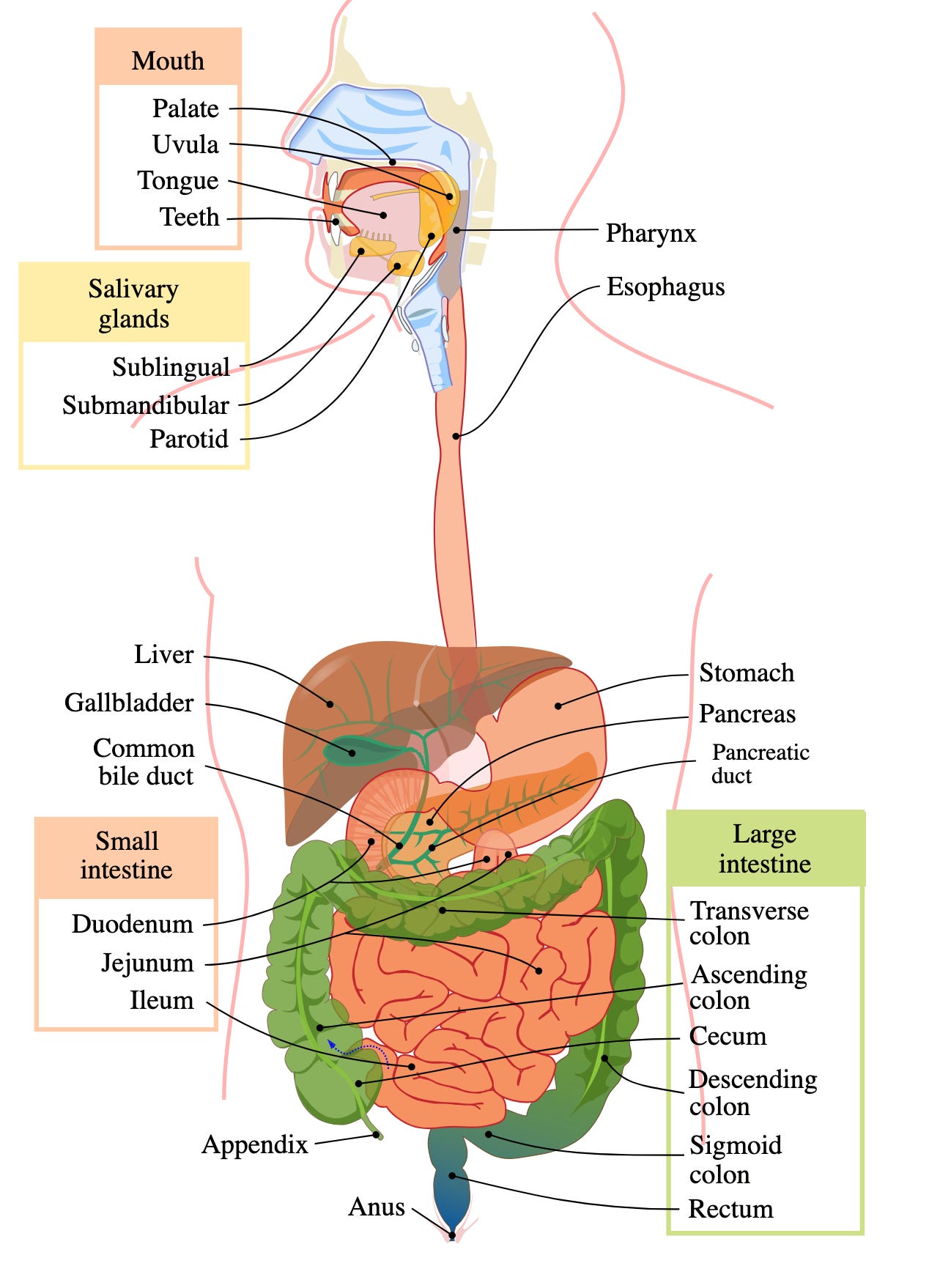
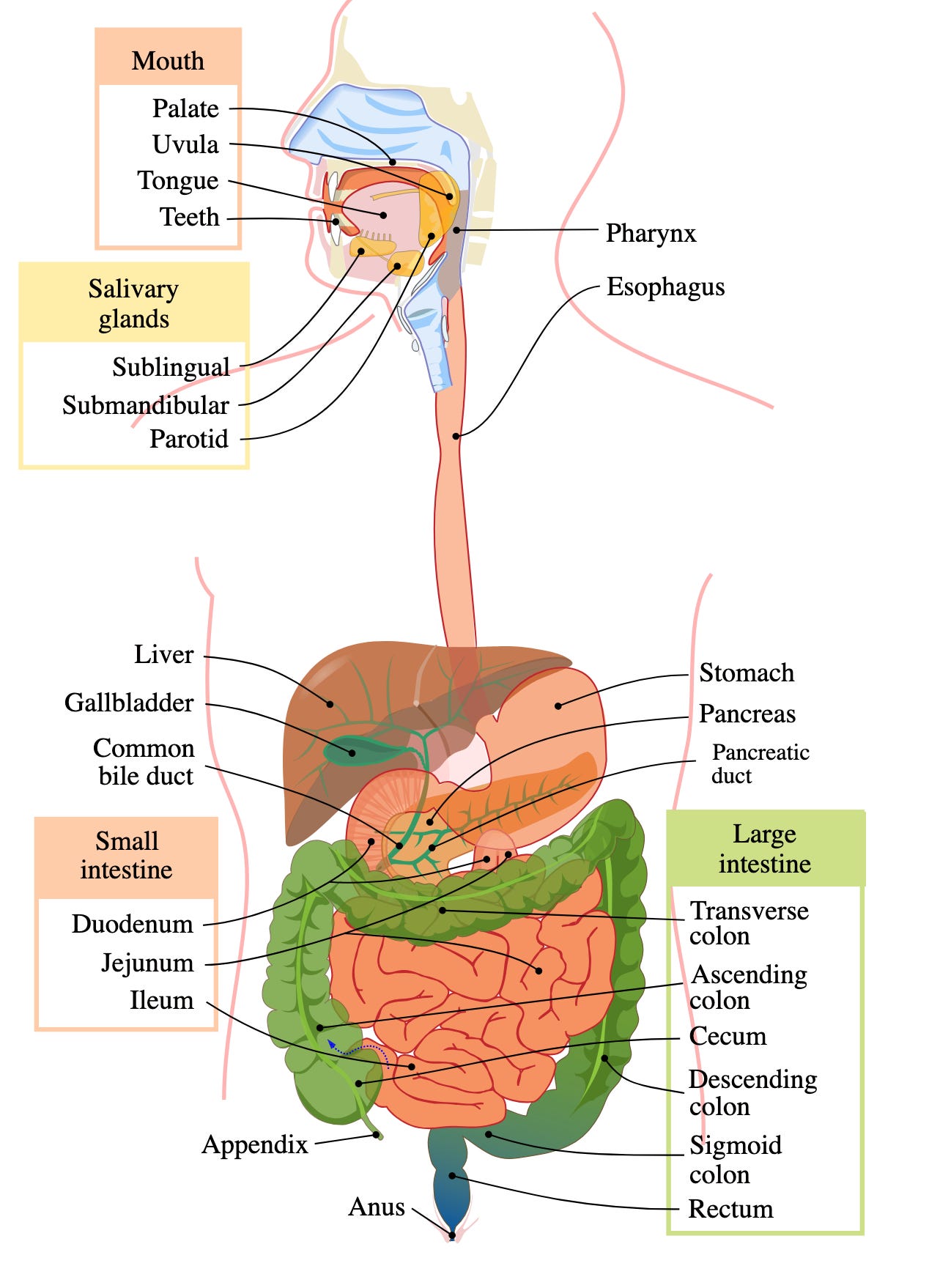
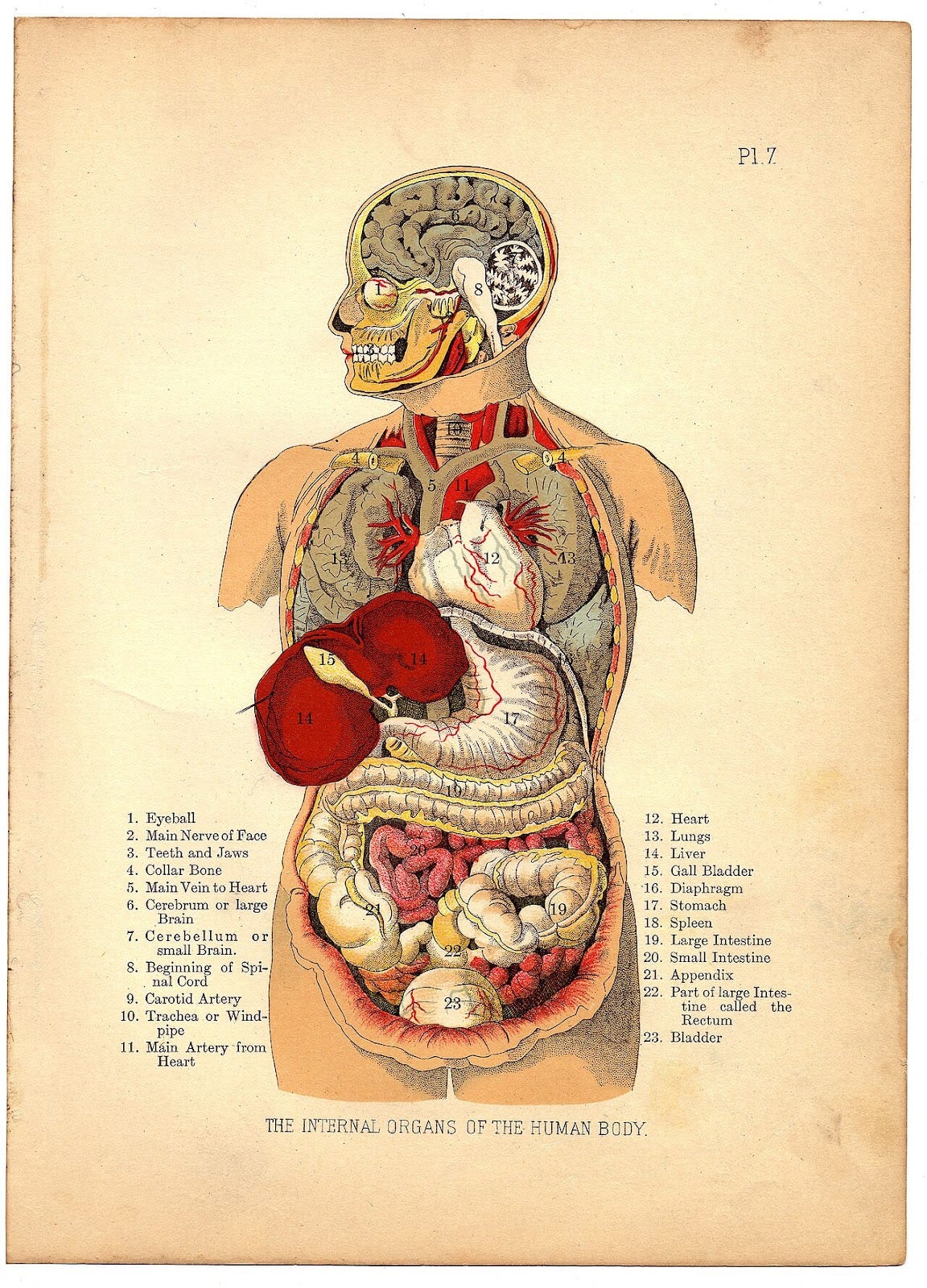
The gut has 500 million neurons1, which is about the same count as a dog’s brain. This is only connected to the brain through roughly 30,000 fibers, most of which lead from gut to head.
The gut has its own sensory apparatus — chemoreceptors in the small intestine to ‘taste’ the digested food, stretch receptors in the stomach wall, and its own advanced immune system.
From the head-brain’s perspective, it’s as though there is a separate intelligent organism, with the complexity of a mammal, living in us, coordinating our digestive behavior. From the whole-being perspective: we often forget that our gut-brain is us_._
[
](https://substackcdn.com/image/fetch/$s_!SLGE!,f_auto,q_auto:good,fl_progressive:steep/https%3A%2F%2Fsubstack-post-media.s3.amazonaws.com%2Fpublic%2Fimages%2F1a5656f9-8834-407d-9ad6-edebc5a07a0e_1268x1758.png)
Source. All images from Wikipedia unless otherwise stated.
The heart has 50,000 neurons, which is on the same order of magnitude as a filter feeding lancelet. JA Armour (1991) found that the heart has its own nervous system — sensory neurons to detect what’s happening locally, motor neurons to speed up or slow down heartbeats, and crucially, interneurons that communicate locally before reaching the brain (which is relatively far away). A heart can keep beating separately from the body — heart transplants can now work with a new heart that is still beating(!). In several cases, memories of the old heart’s host seem to become accessible to the recipient2.
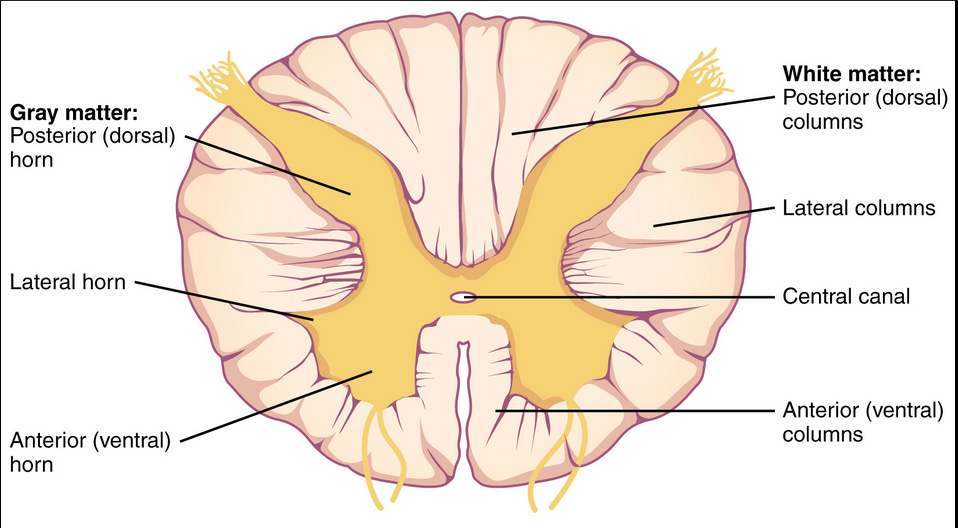
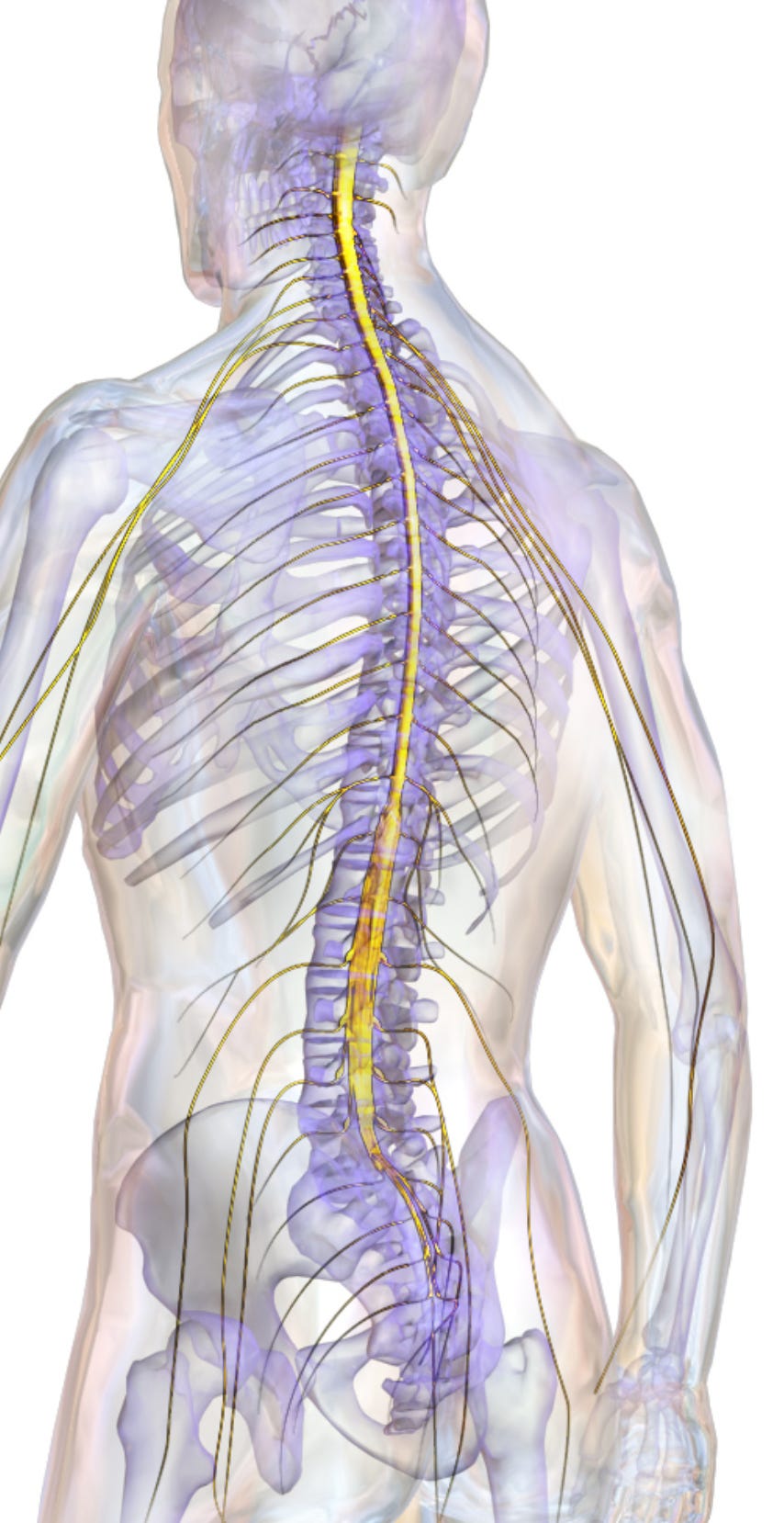
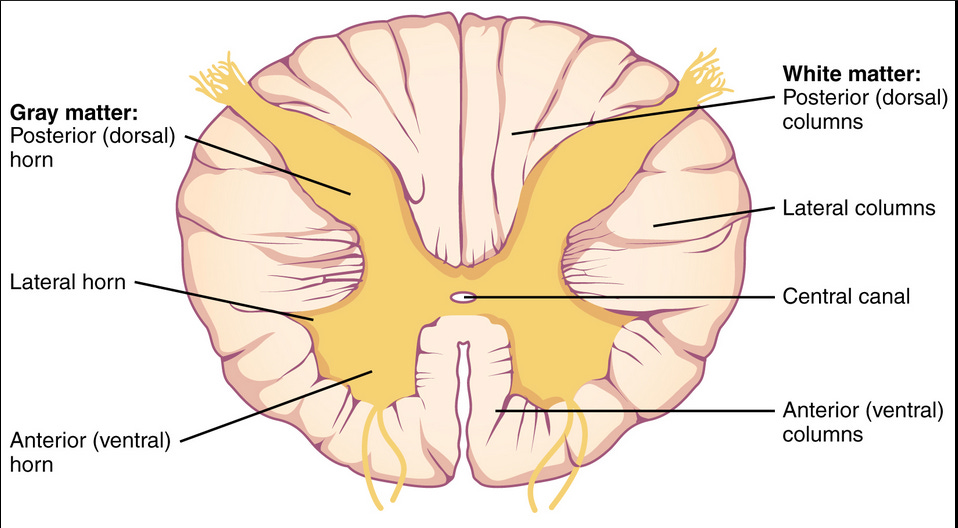
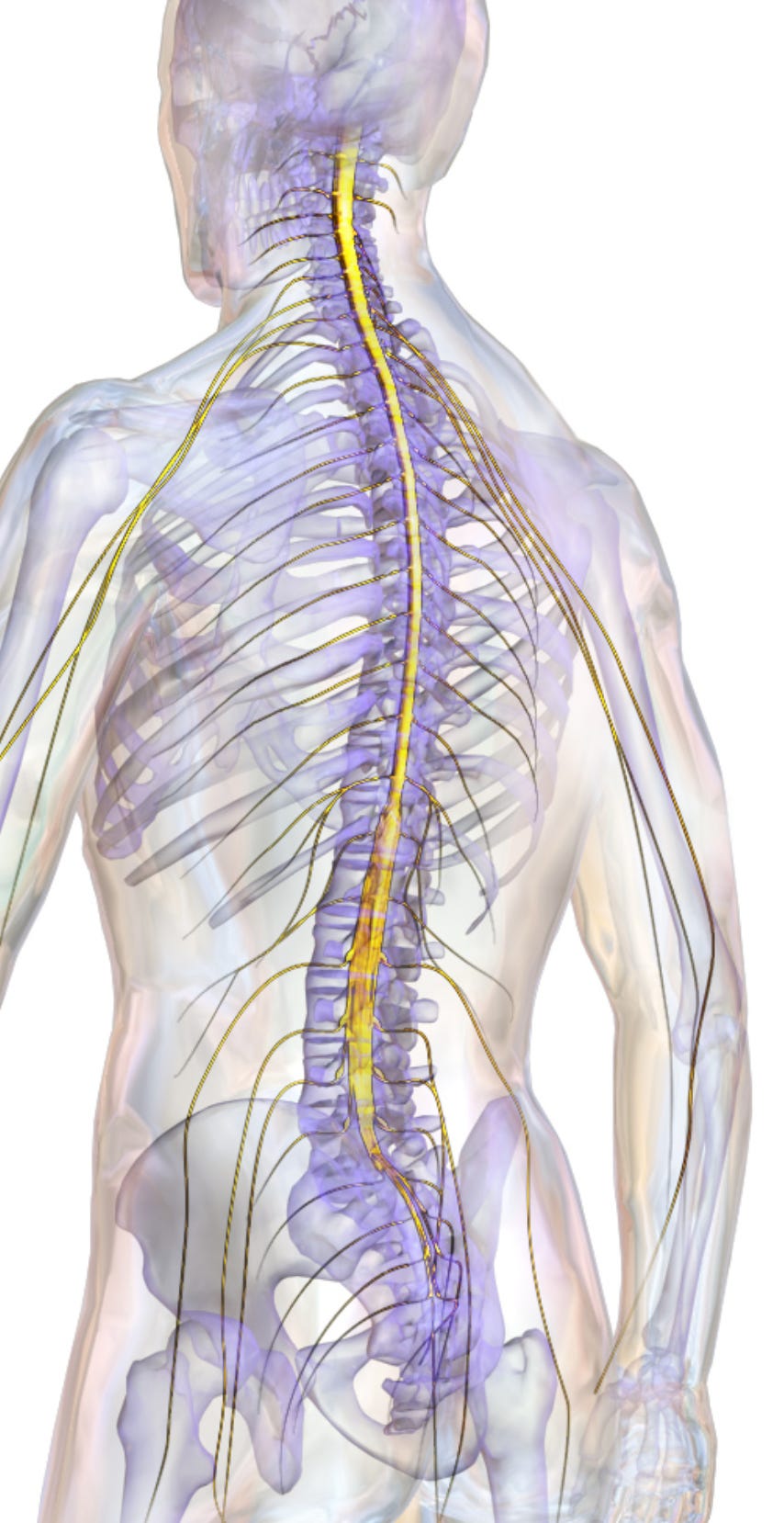
The spinal cord contains about 15 million neurons. In addition to local reflex arcs and movement patterns, we know that the neurons in the spine have a huge role to play in sensing pain. Melzack and Wall’s gate control theory of pain (1965) was that the dorsal horn in the spine would amplify or suppress signals from our pain receptors before they would ever reach the brain, acting as a ‘pain gate’. They were right about the local computation, but wrong to assume that pain was the same as the firing of a pain receptor3.
[
](https://substackcdn.com/image/fetch/$s_!Kjd5!,f_auto,q_auto:good,fl_progressive:steep/https%3A%2F%2Fsubstack-post-media.s3.amazonaws.com%2Fpublic%2Fimages%2F1ded0701-93bd-4057-9259-78c9c029990d_958x528.png)
[
](https://substackcdn.com/image/fetch/$s_!4Xs4!,f_auto,q_auto:good,fl_progressive:steep/https%3A%2F%2Fsubstack-post-media.s3.amazonaws.com%2Fpublic%2Fimages%2Ffd206470-fc6c-4daf-9814-5fa2b6c10dc1_854x1658.png)
These clusters of neurons allow the organs independent activity.
[
](https://substackcdn.com/image/fetch/$s_!bsyB!,f_auto,q_auto:good,fl_progressive:steep/https%3A%2F%2Fsubstack-post-media.s3.amazonaws.com%2Fpublic%2Fimages%2Fd576ee78-0050-4aba-abb1-e39d1414bb40_1152x1600.jpeg)
Exercise
Take a breath, and feel your feet on the ground.
Bring your hands to your head, feel the weight and depth of your skull, the mass of the brain inside. Let yourself move from this position for a couple of minutes.
Bring your hands to your chest, feel the structure of your ribcage, sense the lungs inside, and your heartbeat. Feel into the back of the ribs, any sensations or emotions there. Let yourself move from this position for a couple of minutes.
Bring your hands to your midsection, feel underneath the abdomen to your viscera. Softly feel your stomach on the left side below your heart, the intestines below your stomach. Rest your hand there and feel the weight of all the organs.
Bring to mind someone you have had a simple, loving relationship with. A childhood pet, close friend, or perhaps a character in a movie or TV show you feel resonance with. Remember a specific situation involving this figure.
Where do you notice sensations in the body?
Now bring to mind a scene where you felt particularly safe and relaxed. Maybe: a sunny beach near a calm ocean with a gentle sea breeze; a blanket around your shoulders as you huddle before a fire; an field of grass.
Where do you notice sensations in the body?
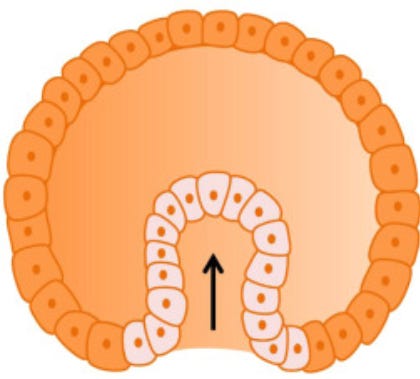
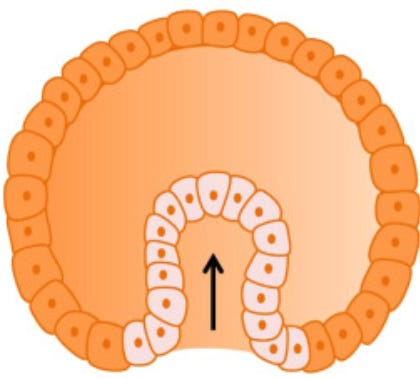
As I continue to explore my internal landscape, I get more and more precise on the ‘location of feelings’. Anxiety is around the front of the lower left rib, right around the middle of the stomach — it feels like my midsection wants to fold inwards, like the invagination of a cell. The left side of my throat tightens at the same time, as if to pull me inside.
[
](https://substackcdn.com/image/fetch/$s_!thoZ!,f_auto,q_auto:good,fl_progressive:steep/https%3A%2F%2Fsubstack-post-media.s3.amazonaws.com%2Fpublic%2Fimages%2F7c608cd2-1c52-4aa8-93ee-bdb53c013fb1_420x379.png)
What does it mean that that I feel my anxiety in my gut? And that I clearly feel when I’m speaking from my head or my heart (or both)?
The neuro-reductionist story is that the feeling of location is downstream of some brain region — maybe the somatosensory cortex firing in a certain way. (Yet I can also feel if I’m more inside my prefrontal cortex versus more in the cerebellum — you can try this quickly yourself by feeling the back of your skull and finding yourself there). Why should we privilege the neuron cluster in a patch in our cortex over the cluster in our gut, or our heart?
I find it more plausible that the feeling of speaking from the gut is akin to allowing that center of intelligence coordinate the rest of our body. Sometimes our ‘gut feelings’ become so strong they are impossible to ignore, but it is also possible to live in more harmonious relation between the head, heart, and gut — all the intelligence centers.
1
Our brain has ~80 billion neurons — the more interesting comparison is not fractions of neuron counts but complexity of function that these neuronal networks can take on. I am assuming here that neuron count roughly correlates with functional complexity. Herculano-Houzel (2017) “Numbers of neurons as biological correlates of cognitive capability” gives this more detailed treatment.
3
Pain is an experience, which is better understood as an output of distributed central nervous system processing. Melzack himself later recognized the flaw in the gate control theory and developed his “neuromatrix” theory (1990) to capture the distinction between nociception and the experience of pain.
No posts
 Instagram Engineering
 Shopify Engineering