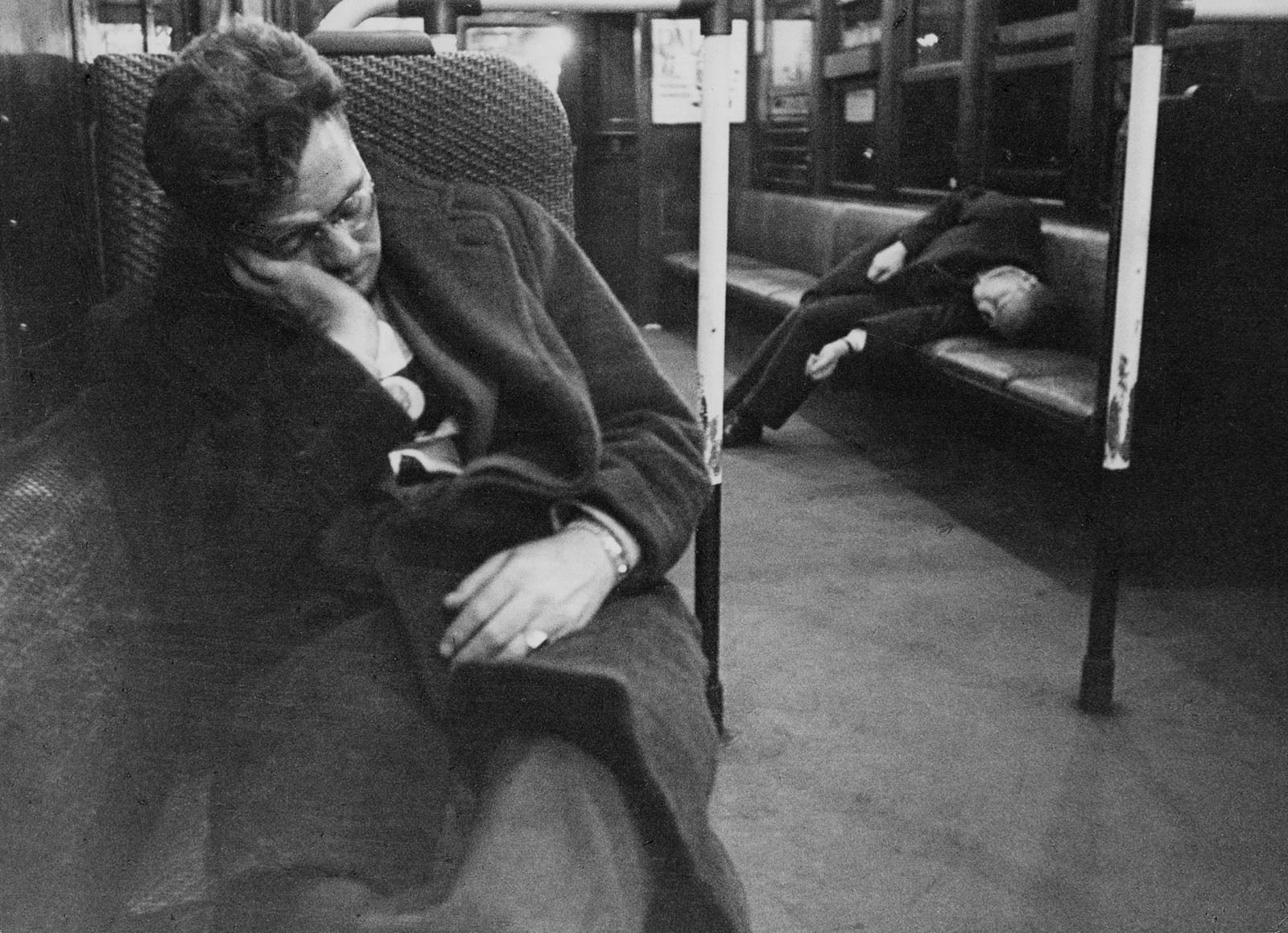
Vittoria Benzine, at Artnet (via Oliver Thomas):
The singular American filmmaker Stanley Kubrick saw the little details. He even saw the future. But, most of all, he saw people, with all their quirks. Kubrick’s films, from Dr. Strangelove (1964) to The Shining (1980), offer proof of this — as do his earliest photos, produced during the 1940s. One new trove of 18 such images will get its first-ever outing next week, when Los Angeles-based Duncan Miller Gallery presents the find alongside works by contemporary photographer Jacqueline Woods at the Photography Show in New York. [...]
The photos are some of the earliest images that the director made for Look. “New York’s subway trains are a reading room on wheels, a lover’s lane and, after 11 p.m., a flophouse,” Kubrick’s subsequent photo essay accompanying his subway visions opined.
I’ve seen some of these before, but not all. (Which makes sense, if some of them have only now been discovered.)
Mia Moffet, writing for Museum of the City of New York back in 2012 (where you can see more of these photos):
As you can see below, with the exception of iPods and smart phones, activities on the train haven’t changed much in the last 66 years, including shoving one’s newspaper in everyone else’s faces.
My favorite:
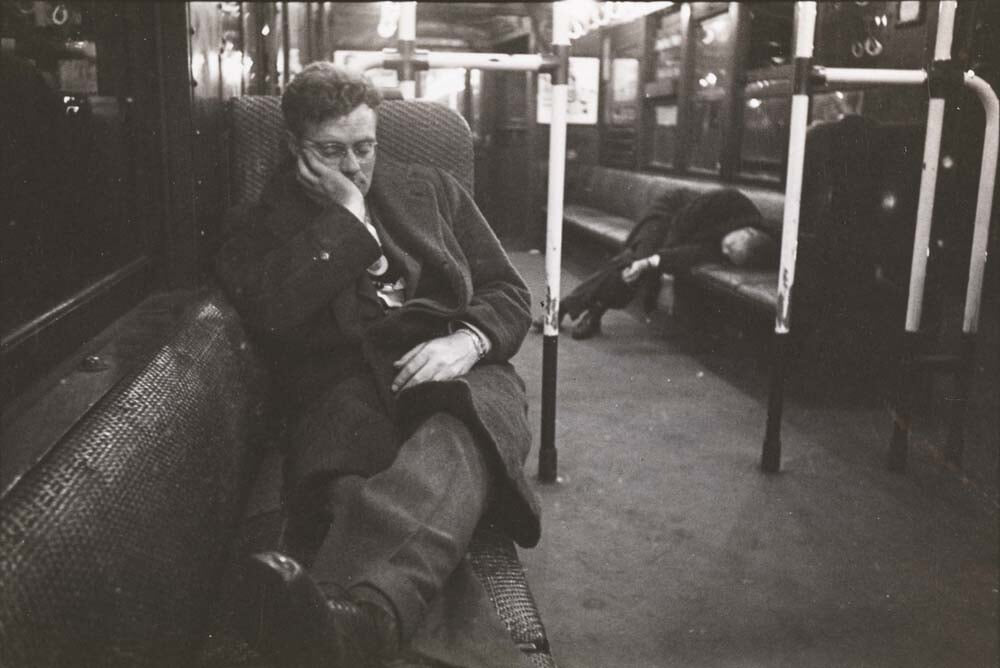
(Here’s another from the same scene, moments apart.)
Moffet then quotes from this 1948 interview with young “Stan” Kubrick, regarding how he captured them:
Indoors he prefers natural light, but switches to flash when the dim light would restrict the natural movement of the subject. In a subway series he used natural light, with the exception of a picture showing a flight of stairs. “I wanted to retain the mood of the subway, so I used natural light,” he said. People who ride the subway late at night are less inhibited than those who ride by day. Couples make love openly, drunks sleep on the floor and other unusual activities take place late at night. To make pictures in the off-guard manner he wanted to, Kubrick rode the subway for two weeks. Half of his riding was done between midnight and six a.m. Regardless of what he saw he couldn’t shoot until the car stopped in a station because of the motion and vibration of the moving train. Often, just as he was ready to shoot, someone walked in front of the camera, or his subject left the train.
Kubrick finally did get his pictures, and no one but a subway guard seemed to mind. The guard demanded to know what was going on. Kubrick told him.
“Have you got permission?” the guard asked.
“I’m from LOOK,” Kubrick answered.
“Yeah, sonny,” was the guard’s reply, “and I’m the society editor of the Daily Worker.”
For this series Kubrick used a Contax and took the pictures at 1/8 second. The lack of light tripled the time necessary for development.
 Instagram Engineering
 Shopify Engineering