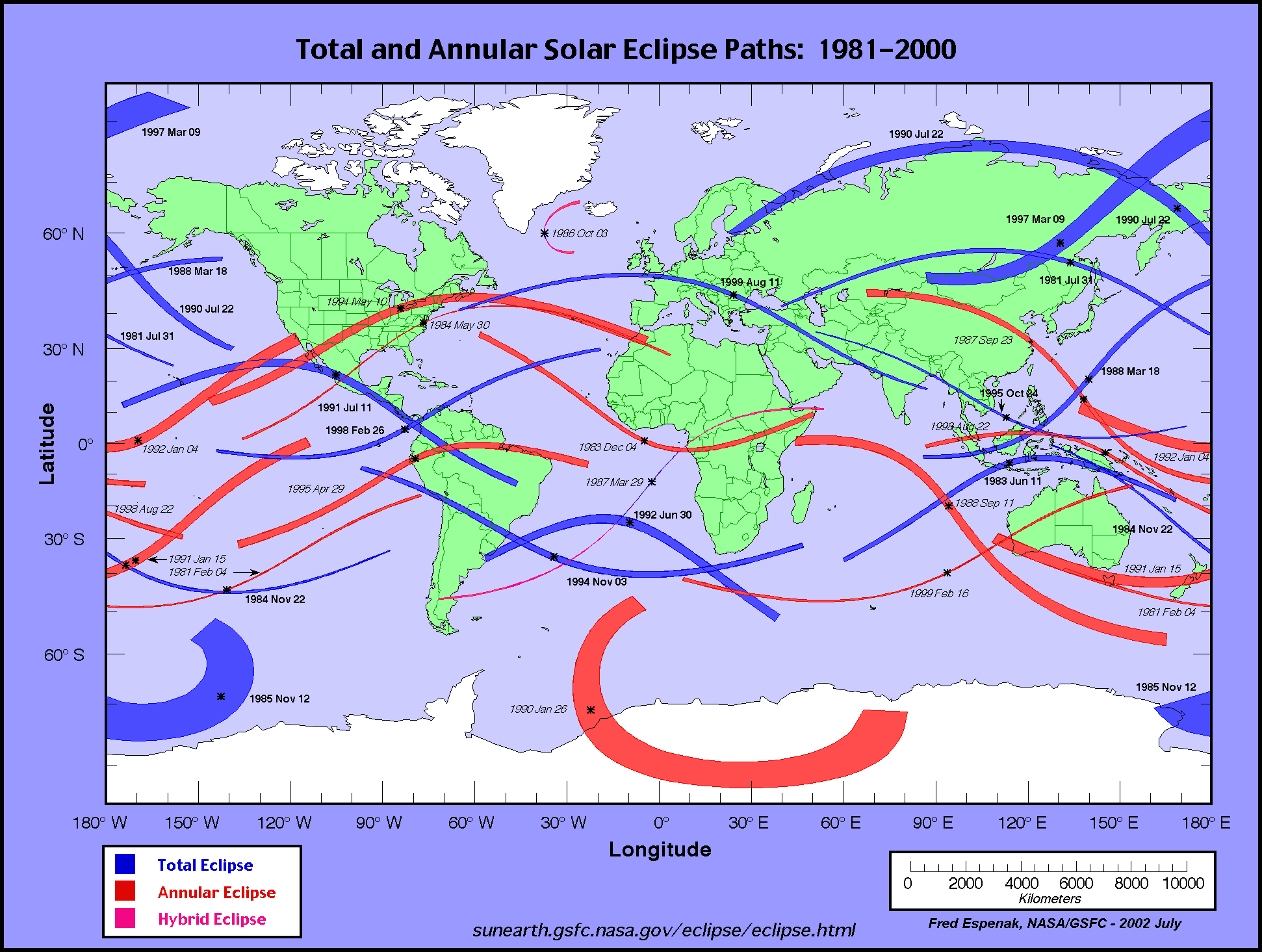
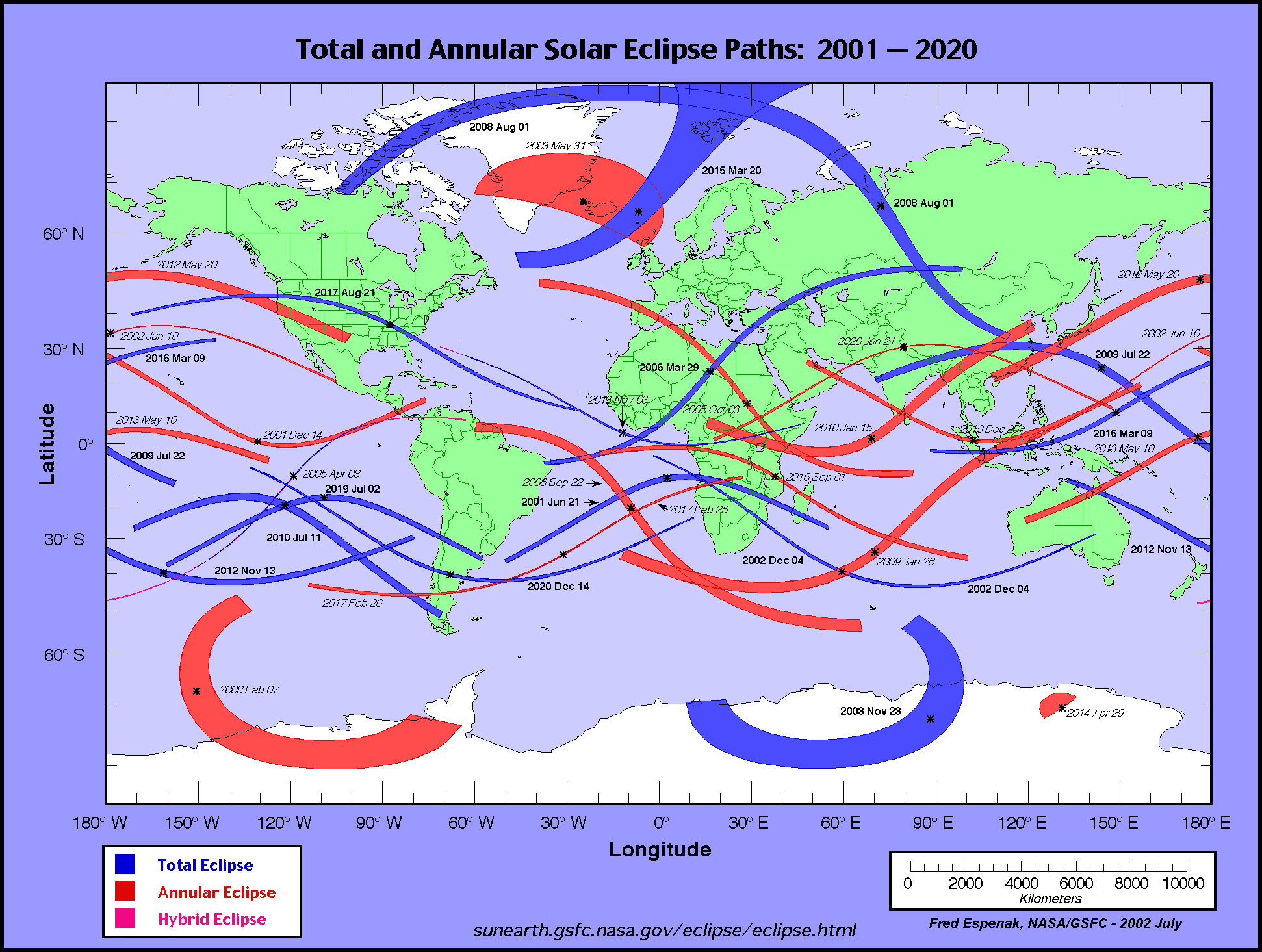
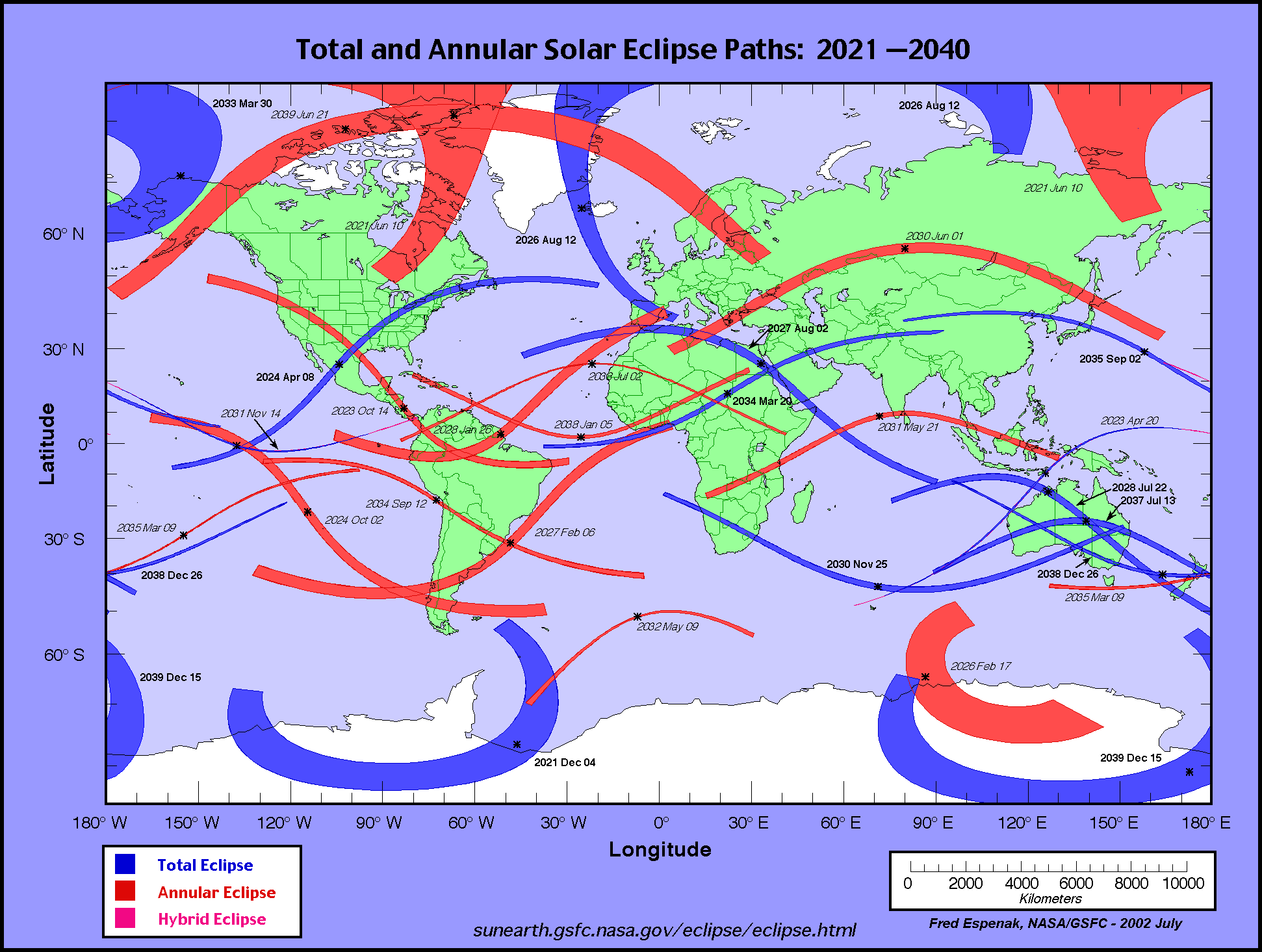
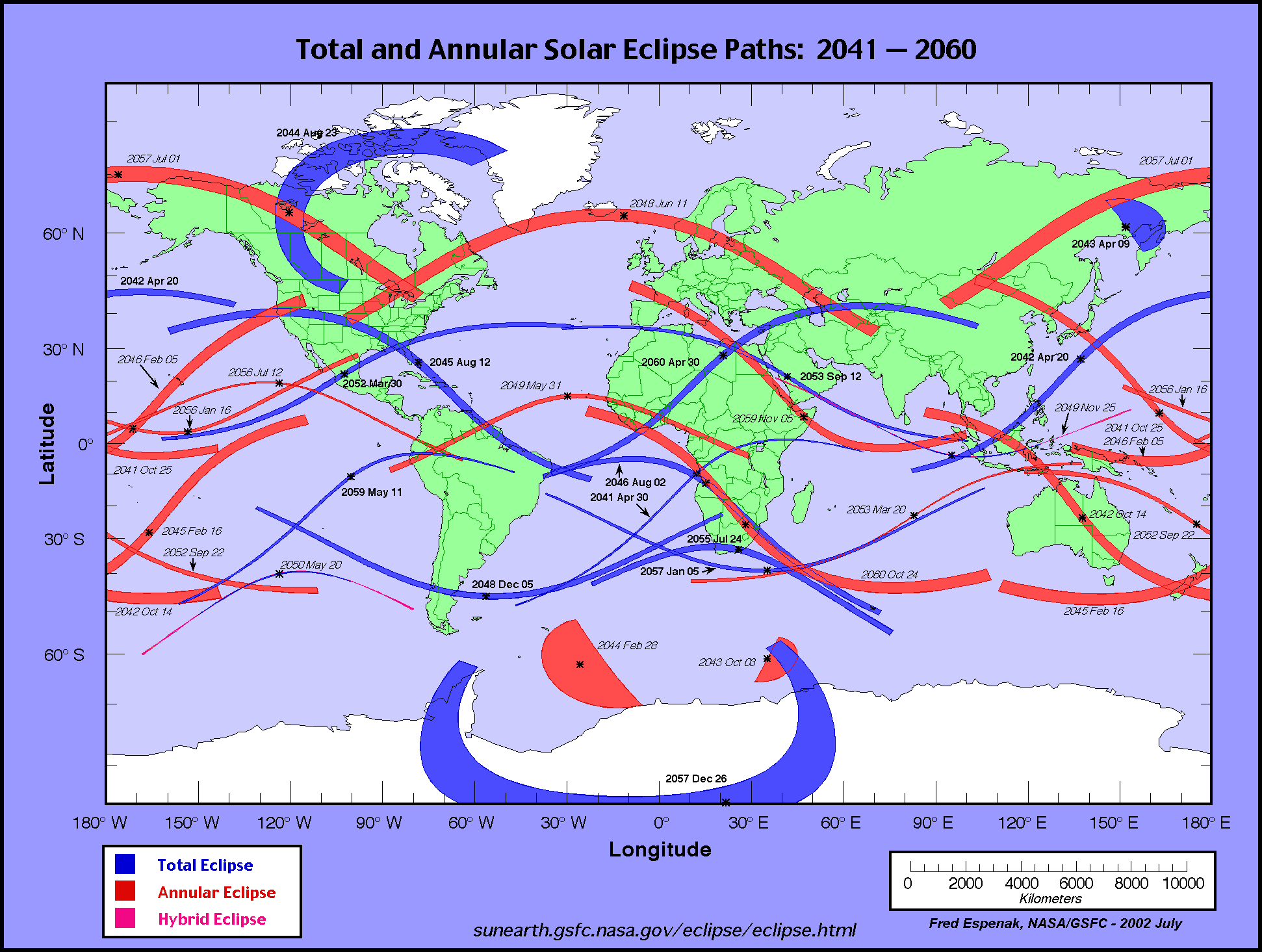
The thing about total eclipses of the sun is that they're very rare, especially in any given location.
London's last was in 1715 and the next is in 2151.
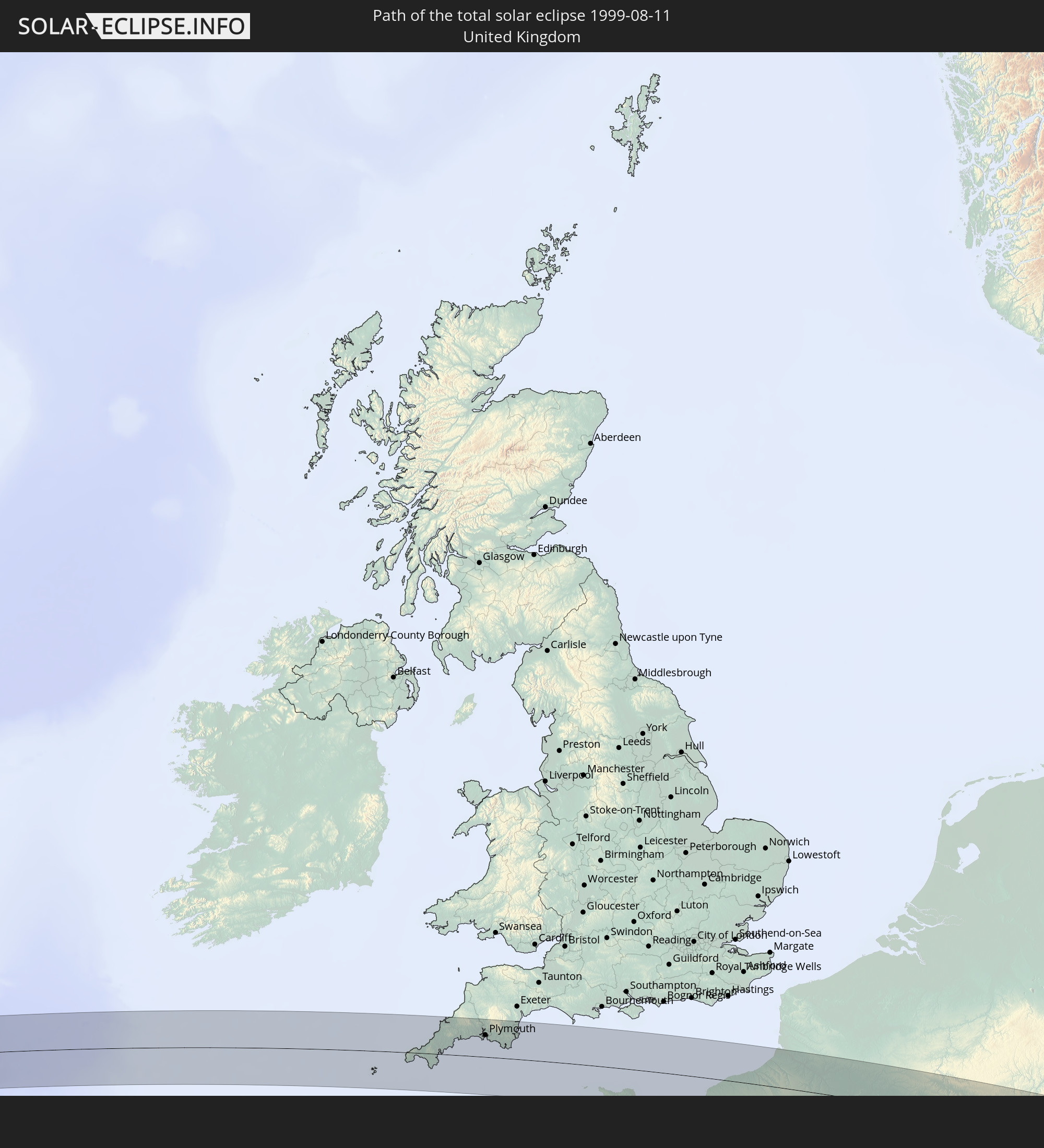
The UK's last was in 1999 and the next is in 2090.
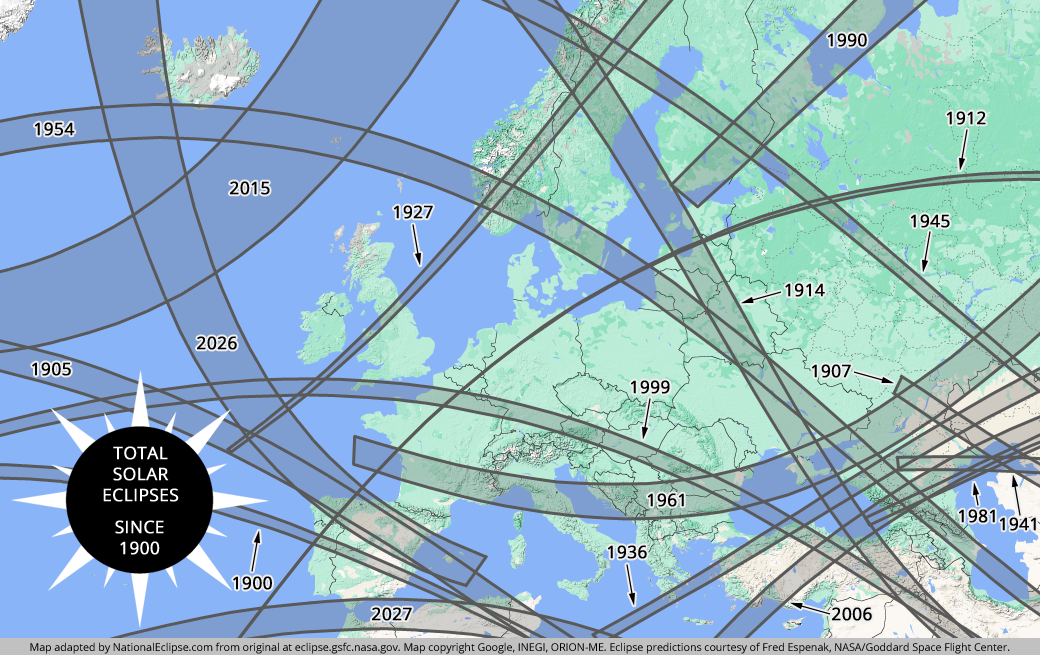
But if you spread the net wider to the whole of Europe they're more common.
The last was in 2015, but only in the Faroe Islands and Svalbard.
And the next is exactly one week away, which is totally exciting.
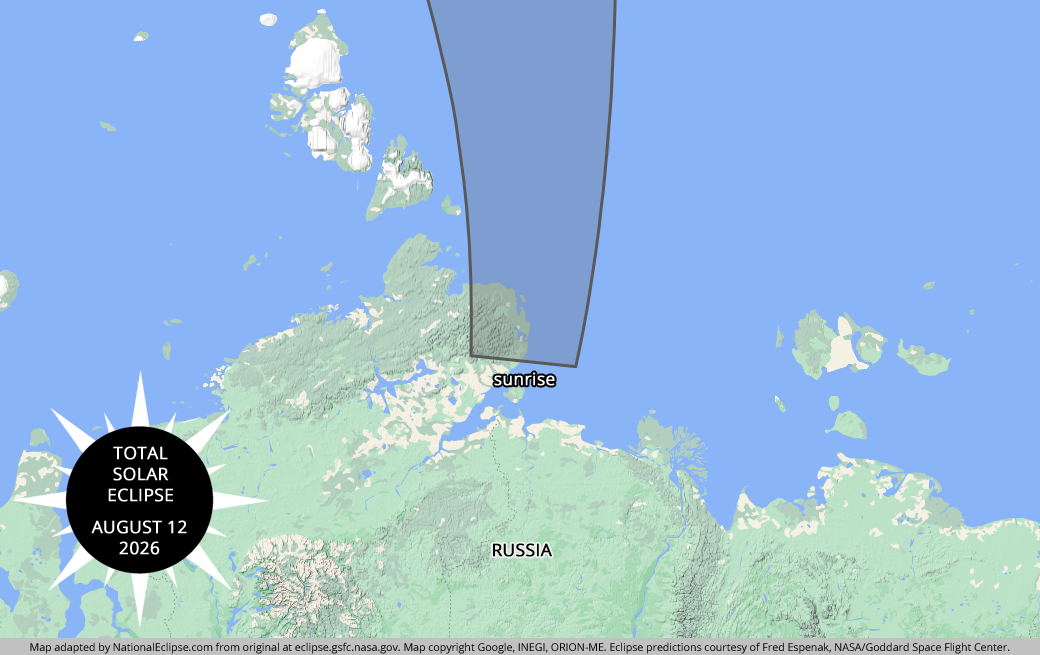
• It starts on the northern coast of Russia at 5.59pm BST, but that's all permafrost and nobody lives there.
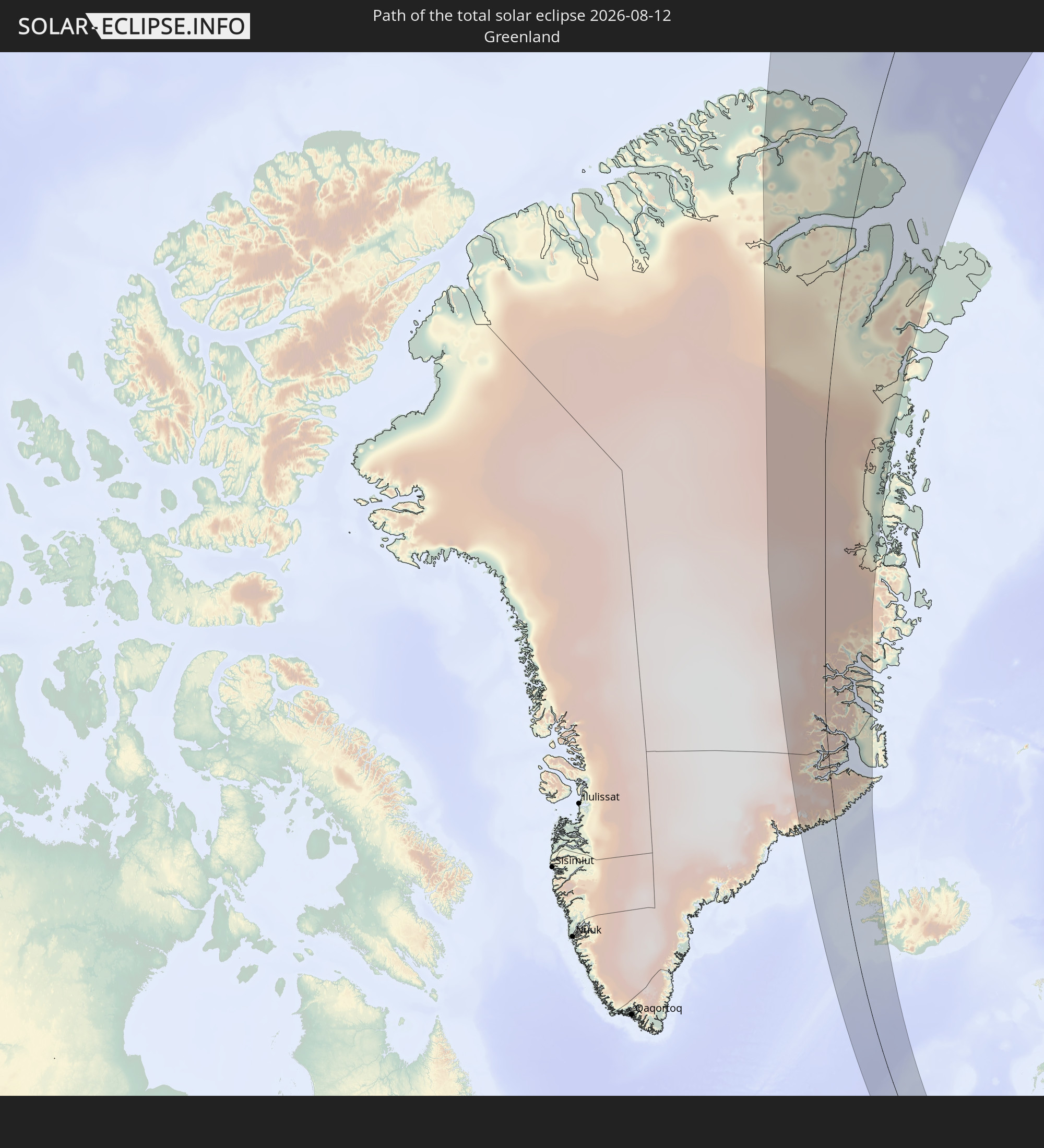
• It then passes over Greenland, but pretty much all icecap and nowhere near the capital.
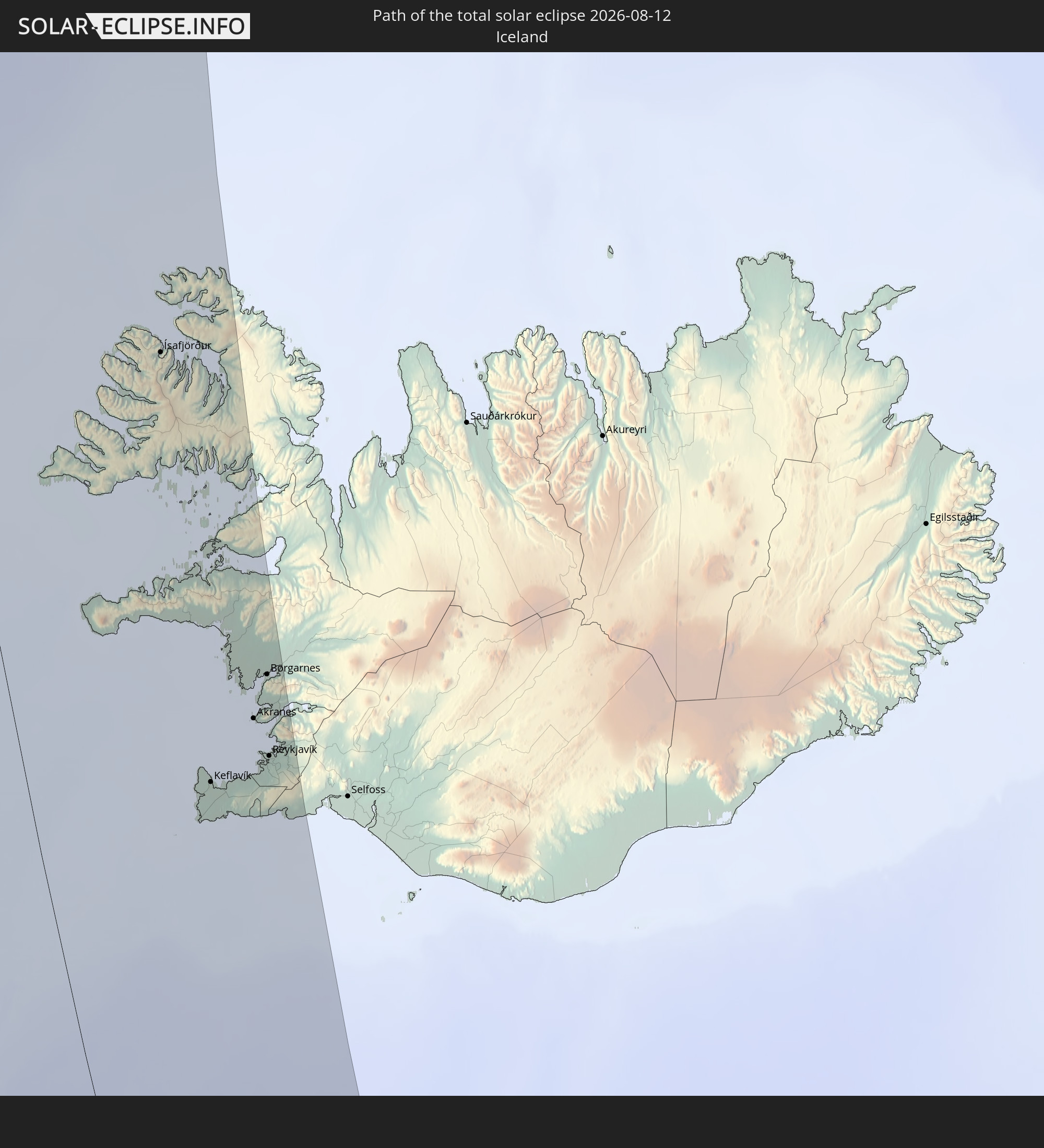
• It crosses the very western edge of Iceland, scraping Reykjavik and the airport at 6.48pm.
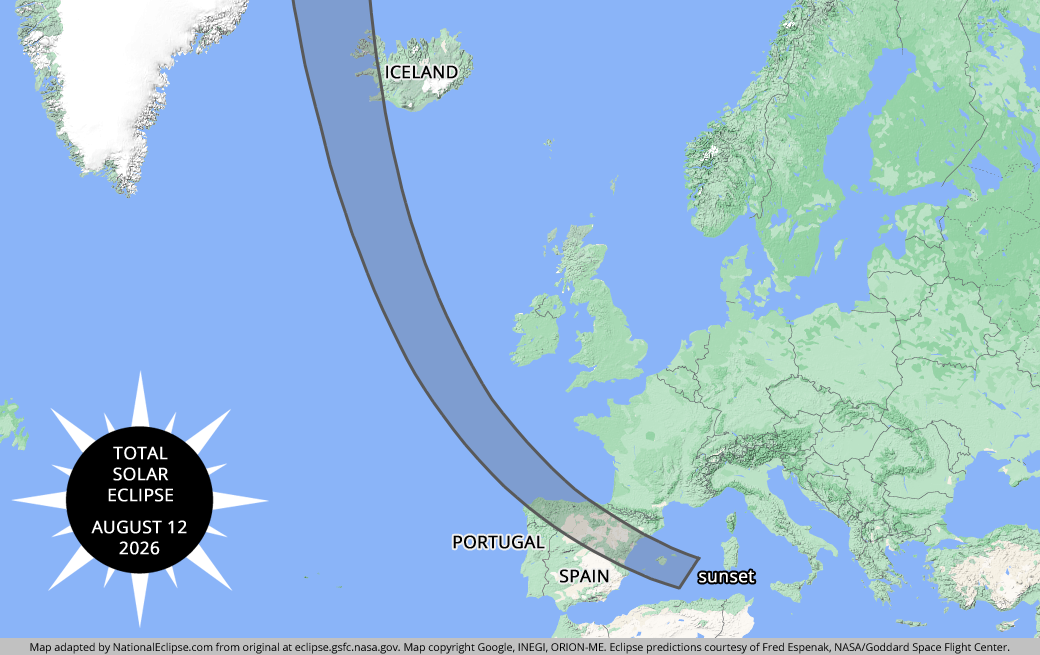
• It sweeps wastefully over the unpopulated Atlantic and Bay of Biscay until 7.26pm.
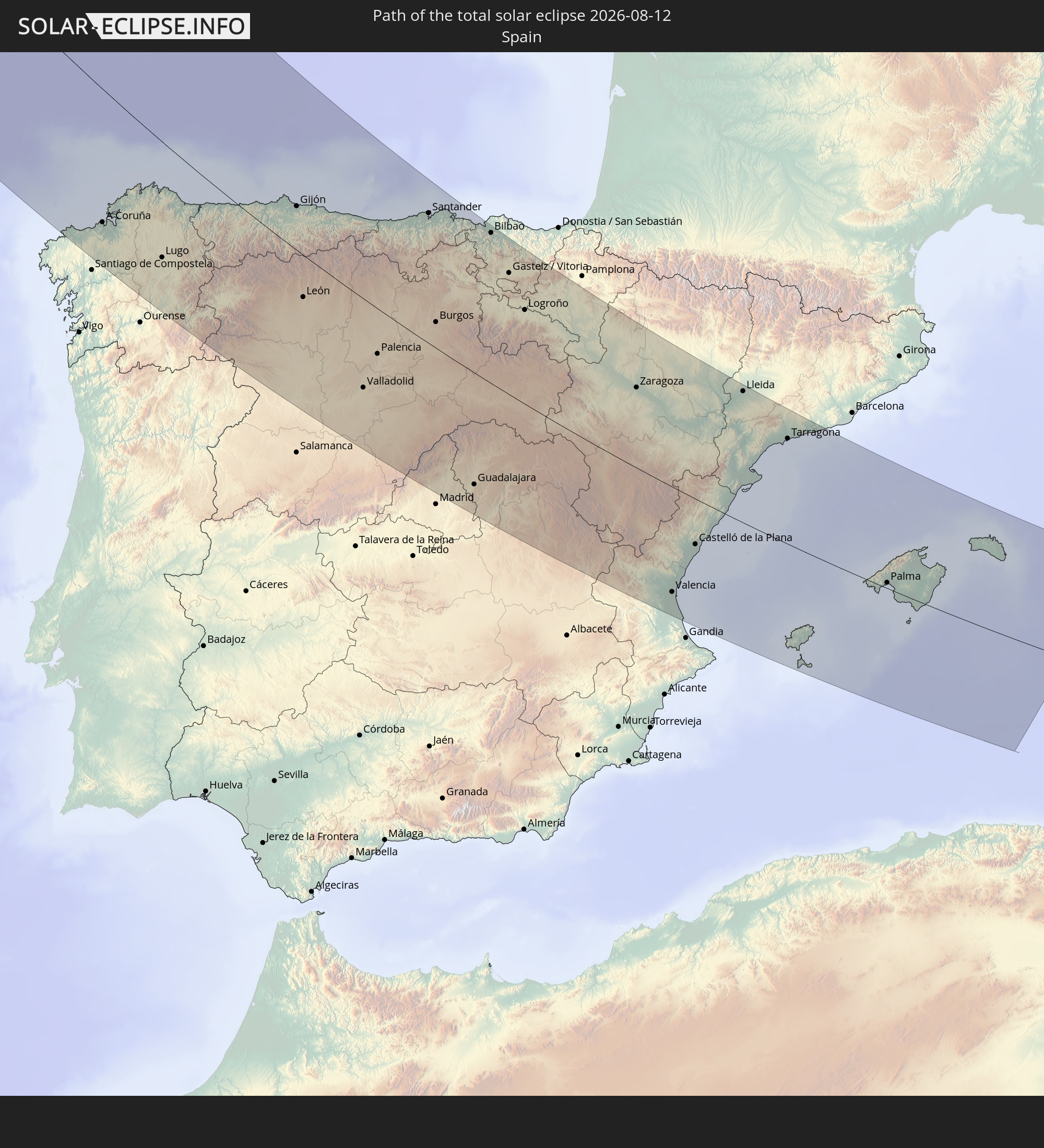
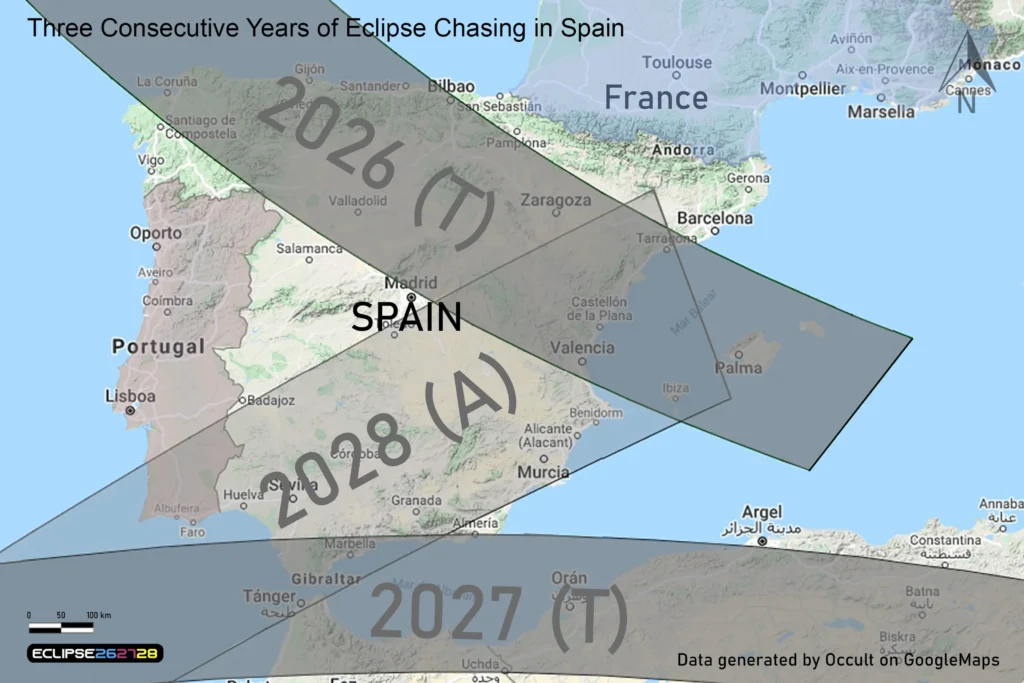
• It hits the northwest coast of Spain and heads 500 miles southeast, crossing Valladolid, Zaragoza and Valencia.
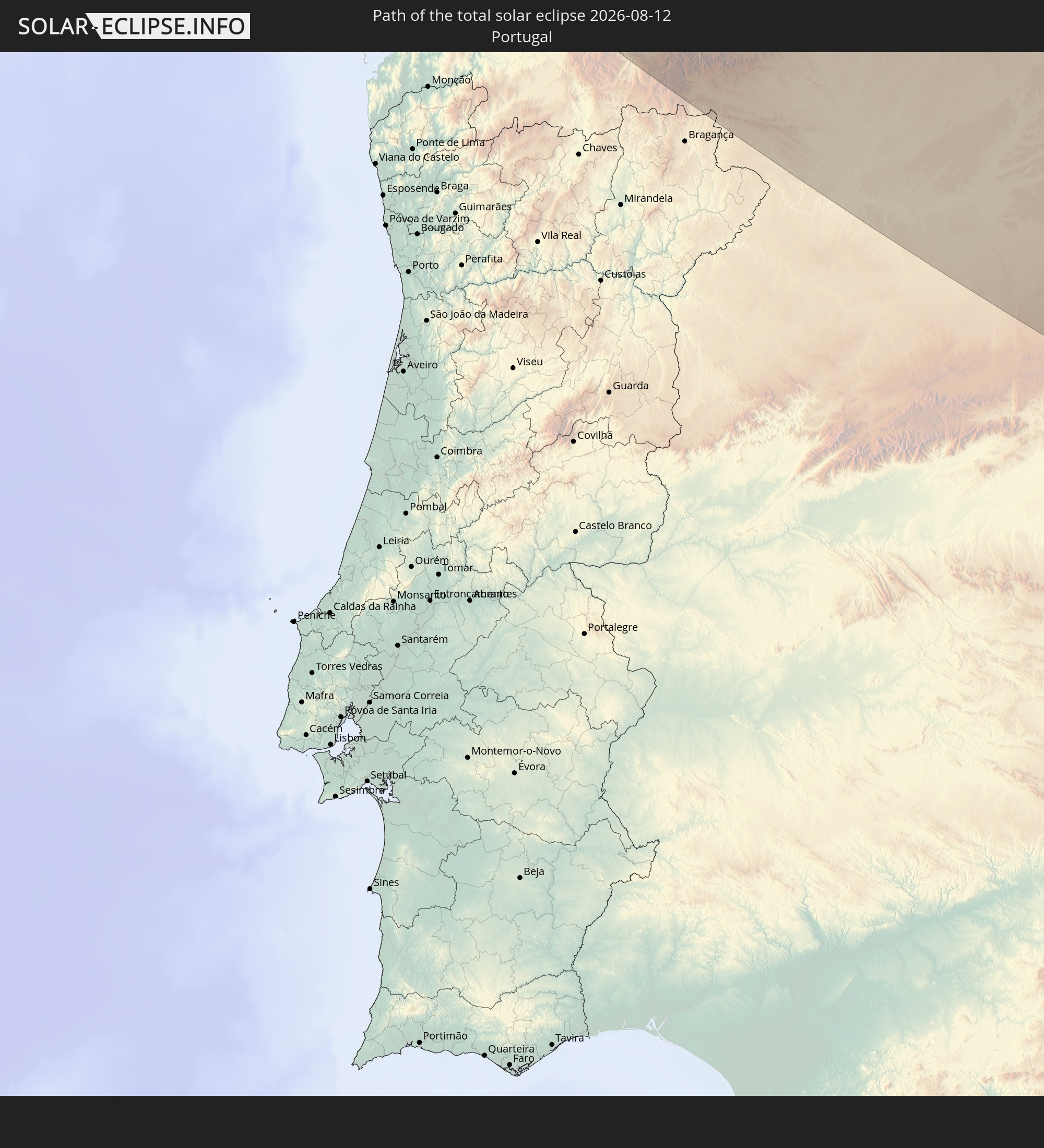
• It nibbles the tiniest corner of Portugal for just 26 seconds, the country's last total eclipse until 2144.
• It sinks towards the islands of Majorca and Minorca at 7.31pm, just as sunset approaches.
• And it ends in the Med at 7.34pm (8.34 local time) as the shadow of the moon hits the Earth at dusk.
The British mainland remains over 200 miles from the edge of totality so we miss out on the spectacle that makes a total solar eclipse so jawdropping. Instead the UK sees a partial eclipse, admittedly one of the best partial eclipses of the 21st century but still not enough for the average Briton going about their day to notice anything is amiss. In London 92% of the Sun's disc will be obscured, which sounds a lot but 8% of a burning star is still a heck of a lot of energy so relatively normal daylight will continue.
From London the eclipse starts at 6.17pm, imperceptibly with a tiny bite on the right-hand edge. It peaks at 7.15pm with the sun as a tiny sliver resembling a very thin frown. And it ends at 8.06pm, about twenty minutes before sunset so quite low on the western horizon. Because this is an evening eclipse the main action is only about 10° above the horizon so you'll need a clear western skyline be able to see much.

I have to caution at this point about never looking directly at the Sun. The last thing you want is a fingernail-shaped burn on your retina (or even blindness) for the rest of your life. A well-placed cloud might allow you to squint at the outline of the eclipse out of the corner of your eye, not that I'm specifically recommending this, but cloud can also be the curse that blots out the entire spectacle outright. Personally I'm going to whip out my eclipse glasses I got for Cornwall 1999 because they're very carefully filtered, and who knows I might even get to use them this time.
To give you some idea of the scale of the 2026 event, think back to what you saw (or didn't) in 1999. London for example saw a 97% eclipse that day, and this is only 92%. Below is a table giving these percentages for other cities across the UK. Liverpool for example does better in 2026 than it did in 1999 (92% compared with 90%), as do Belfast and Newcastle. Meanwhile Plymouth, Birmingham and Norwich do worse. I've also added a column for the partial eclipse of March 2015, should you remember that, and this peaked further north so Scotland saw greater obscuration then. In 2026 the further southwest you are the better.
| | 11 Aug
1999 | 20 Mar
2015 | 12 Aug
2026 |
| Plymouth | 100% | 86% | 95% |
| London | 97% | 84% | 92% |
| Norwich | 92% | 85% | 90% |
| Birmingham | 94% | 87% | 92% |
| Liverpool | 90% | 89% | 92% |
| Belfast | 87% | 93% | 93% |
| Newcastle | 85% | 91% | 90% |
| Glasgow | 82% | 94% | 91% |
| Inverness | 77% | 96% | 91% |
What's unnerving for the UK-bound eclipse chaser is that these are the three best solar eclipses of the last fifty years, and also of the next fifty. You have to go back to 15th February 1961 to find the previous time a partial eclipse in the UK exceeded 90%, and ahead to 3 September 2081 until it happens again. If you're not expecting to still be here in 55 years time, next week's solar eclipse is your very last chance to see a mighty bite.
Taking 60% as the cut-off, here's how rare biggish solar eclipses are.
All the biggish solar eclipses visible from London during the last 100 years
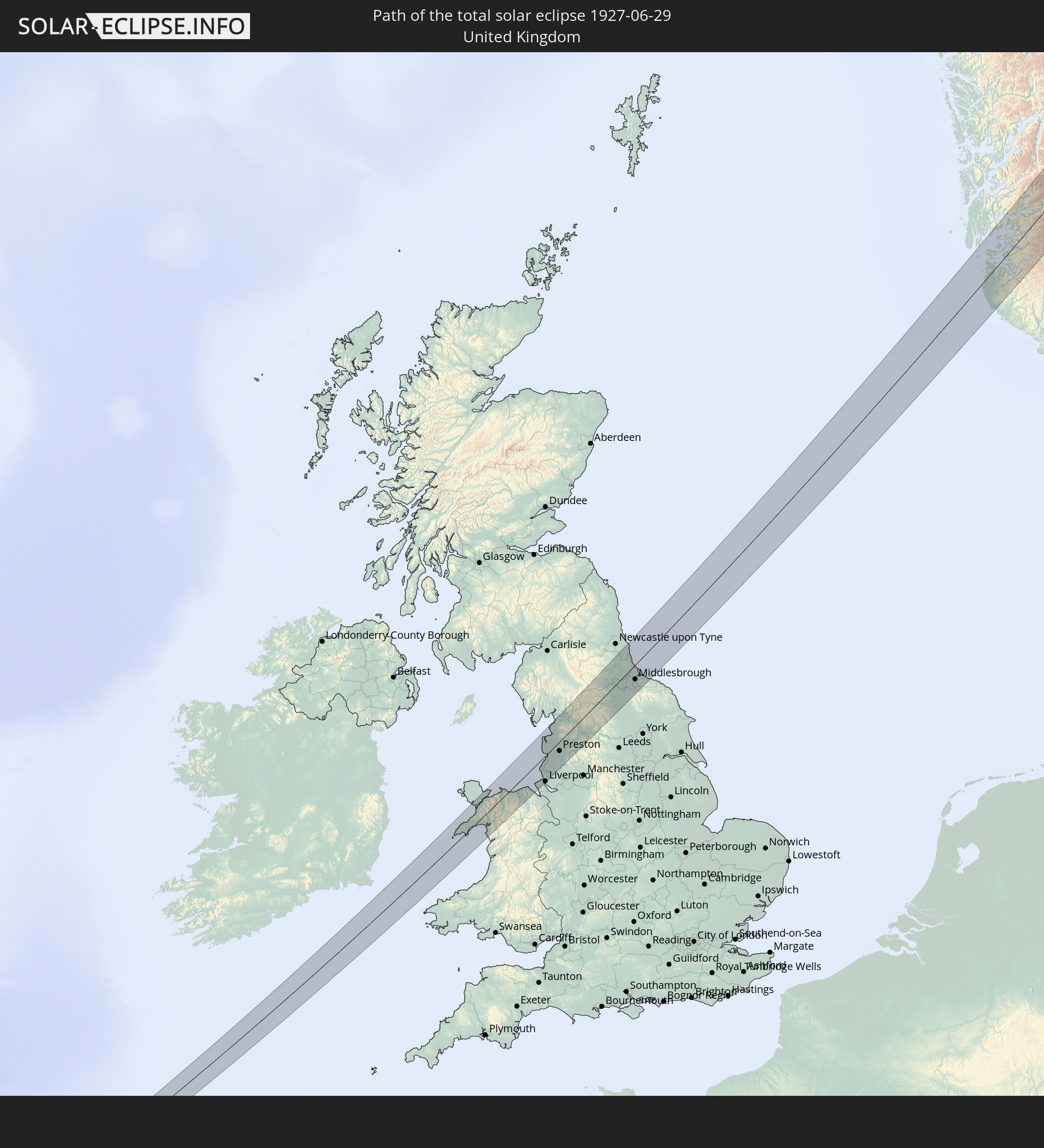
• Wed 29 June 1927 (06:20 BST) 95%
• Wed 30 June 1954 (13:34 BST) 71%
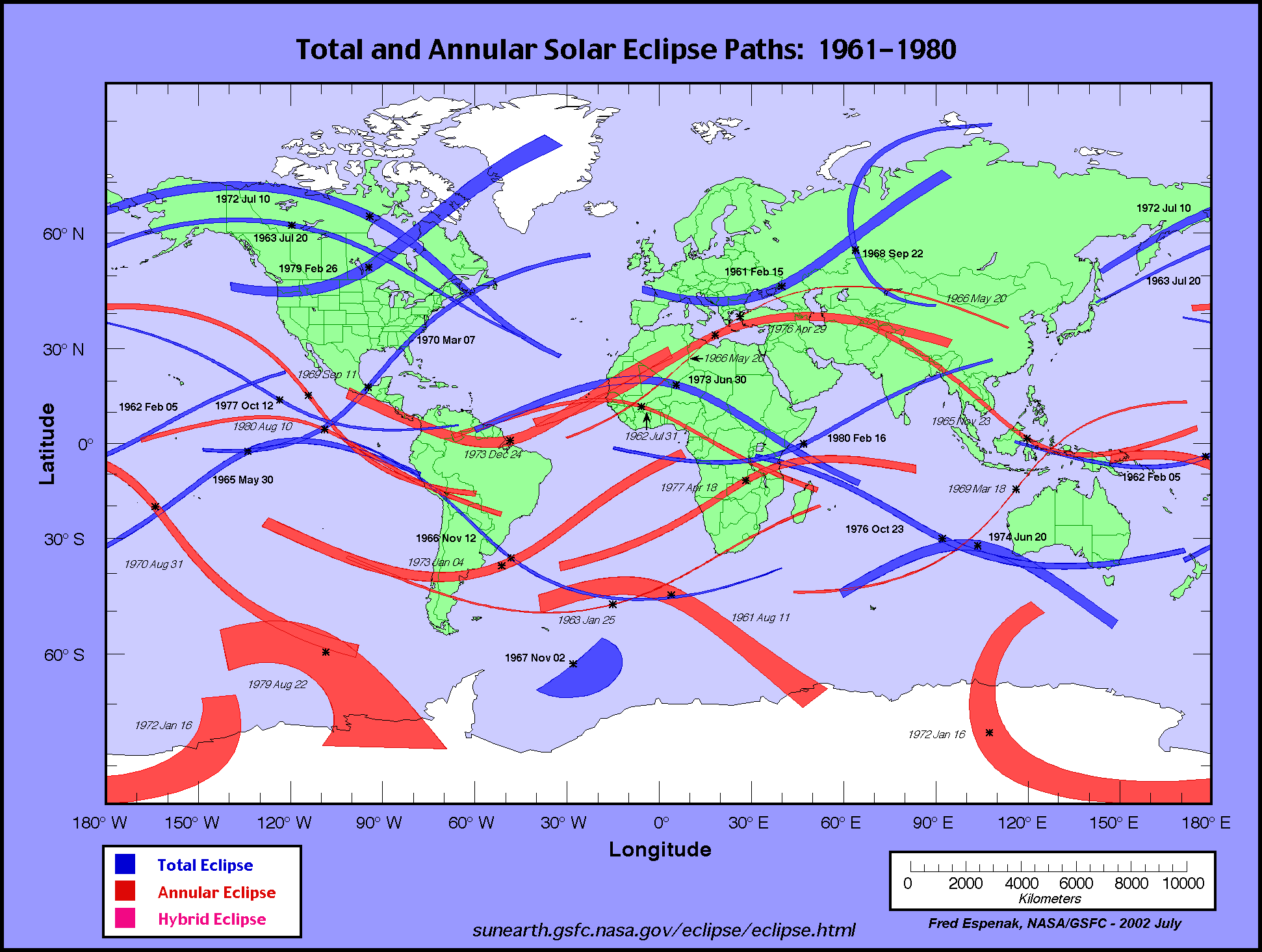
• Wed 15 February 1961 (07:42 GMT) 92%
• Wed 11 August 1999 (11:11 BST) 97%
• Tue 4 January 2011 (08:12 GMT) 68%
• Fri 20 March 2015 (09:31 GMT) 84% All the biggish solar eclipses visible from London during the next 50 years
• Wed 12 August 2026 (19:13 BST) 91%
• Thu 21 August 2036 (19:07 BST) 60%
• Tue 21 June 2039 (19:35 BST) 63%
• Thu 11 June 2048 (13:22 BST) 62%
• Mon 14 November 2050 (13:48 GMT) 73%
• Wed 5 November 2059 (07:37 GMT) 72%
• Thu 5 February 2065 (09:51 GMT) 79%
• Sat 13 July 2075 (04:50 BST) 71%
Nothing exceeds 80% after next week, let alone 90%, until 3 September 2081.
Returning to total eclipses of the Sun, because they're always 100%, how easy is it to travel and see one somewhere in Europe? Alas not very.
There have only been three total solar eclipses in Europe since the start of the century, all in terrible locations.
• 29 March 2006: Georgia, Russia
• 1 August 2008: Greenland
• 20 March 2015: Faroe Islands, Svalbard
Things get better soon, especially in Spain.
• 12 August 2026: Greenland, Iceland, Spain, Portugal
• 2 August 2027: Spain, Gibraltar
• 12 September 2053: Spain, Gibraltar
The 2027 total eclipse occurs less than a year after next week's solar wonder. However it only scrapes the very south of the country (Cádiz, Marbella, Málaga) because the line of totality curves across north Africa. The best places to head are Tangier, Luxor, Jeddah and Mecca, with Luxor being treated to the longest total solar eclipse of the century at almost six and a half minutes. It's then an extremely long time until Europe is troubled again, and in almost exactly the same very limited strip across southern Spain.
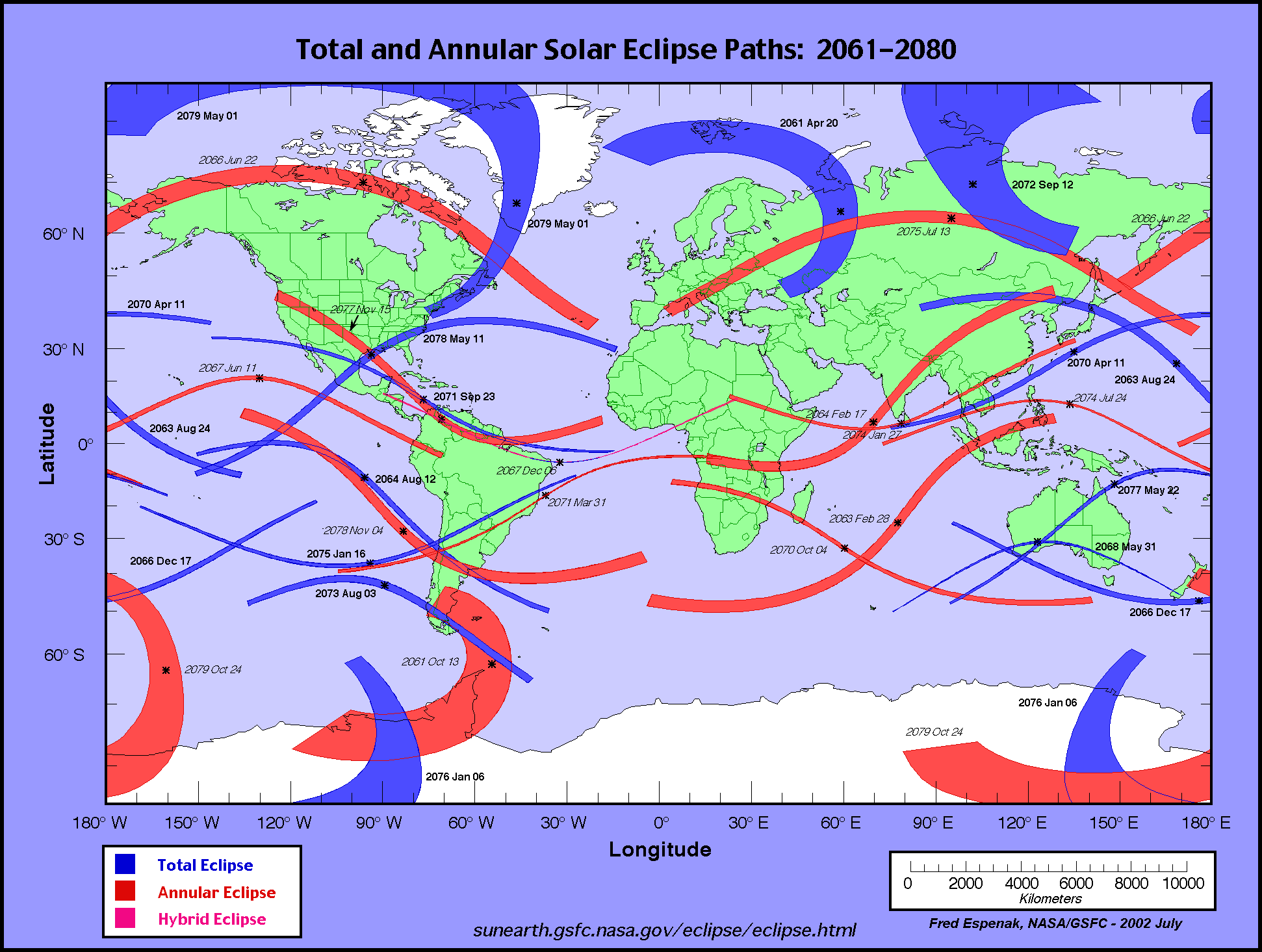
• 20 April 2061: Svalbard
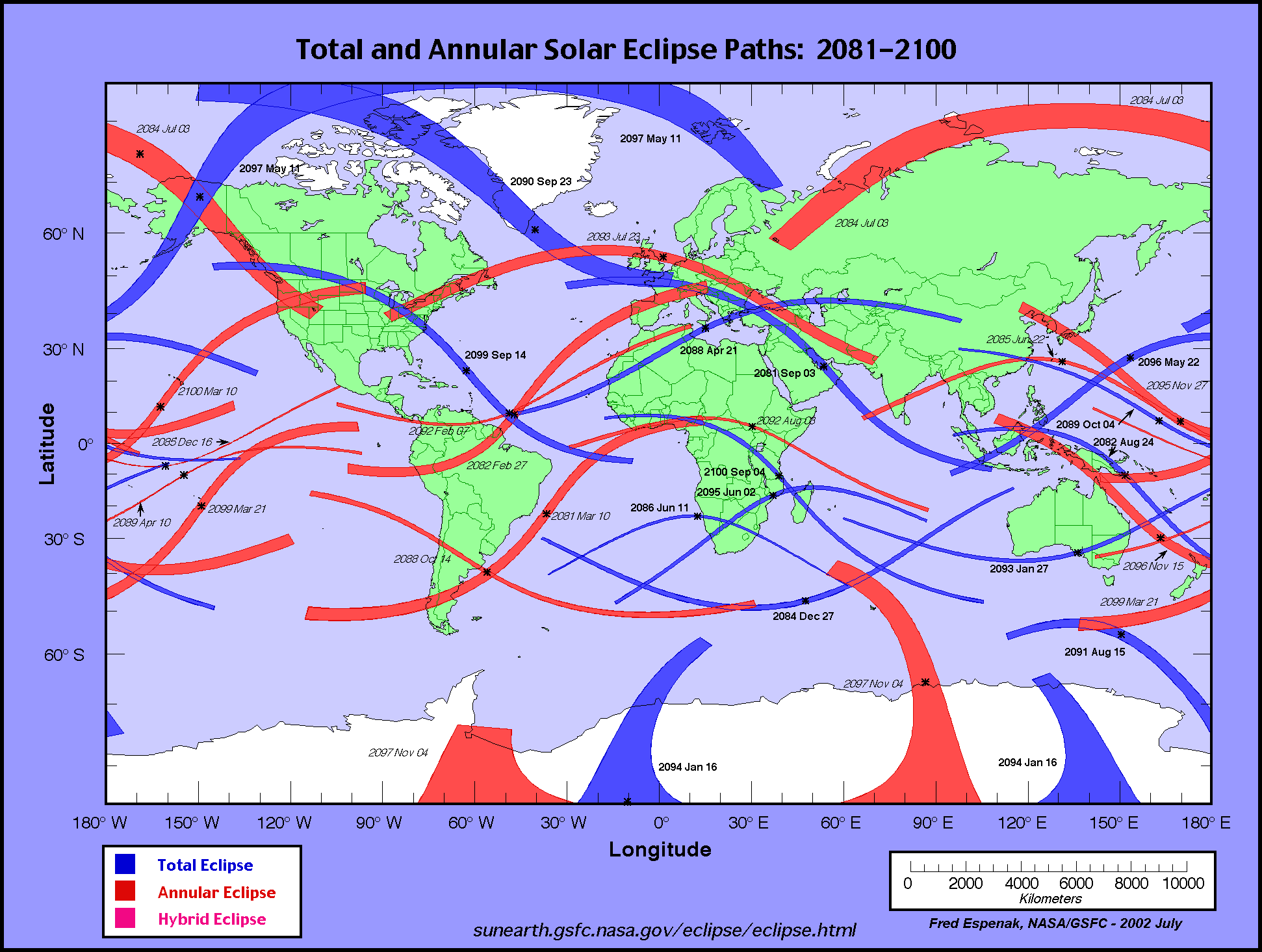
• 3 September 2081: Channel Islands, France, Germany, Switzerland, Liechtenstein, Austria, Italy, Slovenia, Croatia, Hungary, Bosnia and Herzegovina, Serbia, Romania, Bulgaria
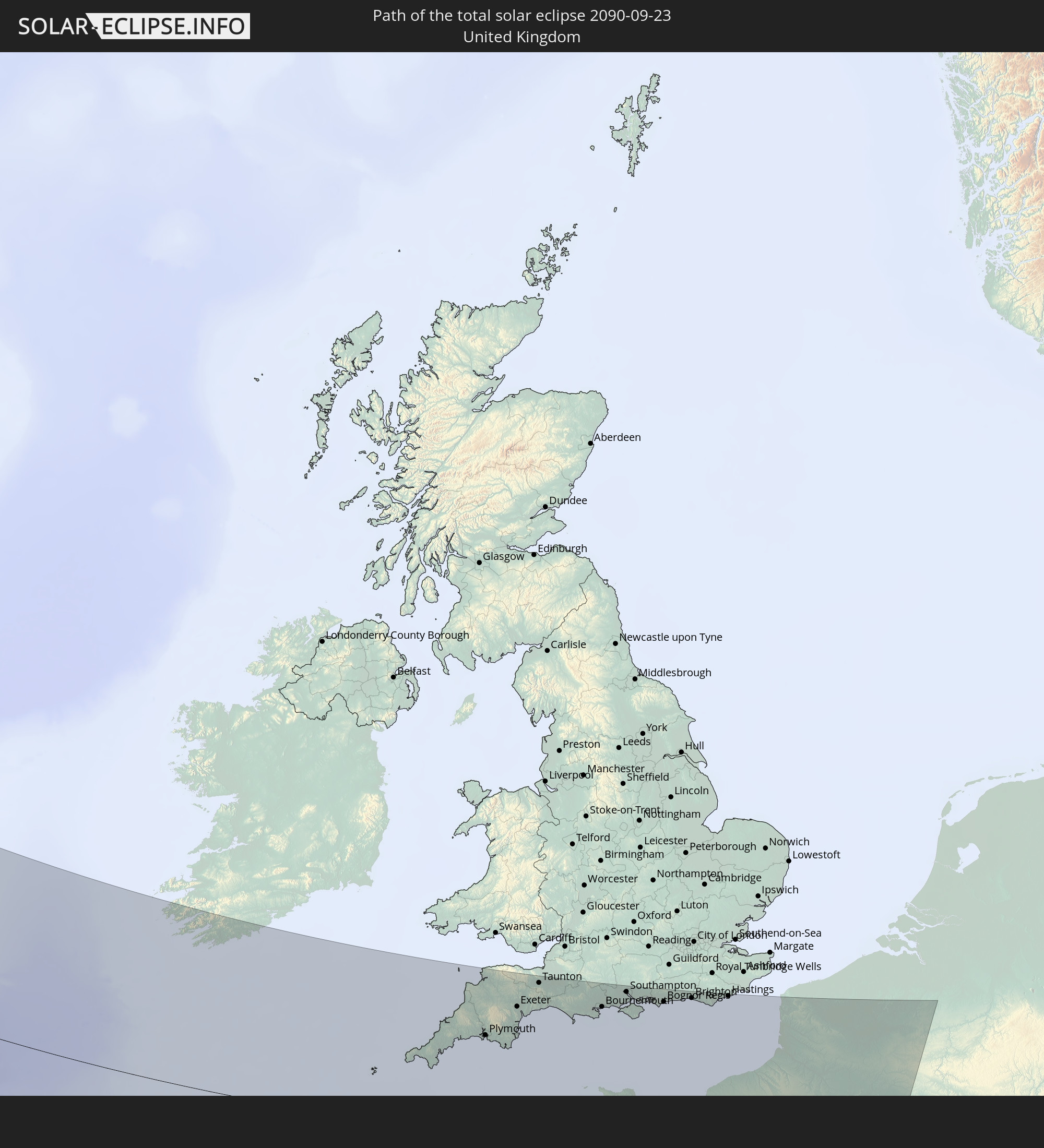
• 23 September 2090: Ireland, England, France, Belgium
• 11 May 2097: Svalbard
The Arctic island of Svalbard is having a similarly bumper 21st century with total solar eclipses in 2015, 2061 and 2097, the catch being that cloud cover may deny residents from seeing any of them. The 2081 eclipse is the continental jackpot crossing over a dozen countries, should you still be alive at the time, then 2090 finally brings totality back to England. As in 1999 the southwest coast is favoured, but with the blackout zone stretching further east as far as Hastings. To any readers currently in their teens, enjoy that one!
In conclusion if you've always wanted to see a total eclipse of the sun but don't want to leave Europe, you have two chances in the next twelve months and then no more for the next 25 years. It's Iceland or Spain or miss out.
You'll have to be quick to grab a flight and accommodation, that is unless you're so keen you planned ahead, and then the incredible spectacle of the sun's corona blazing in a darkened sky could be yours. I'd love to see totality properly having been clouded out in 1999, but it's still a very long way to go for what's either going to be the best thing ever or another crushing disappointment. Nature is a dazzlingly cruel mistress, but wow the buzz of exhilaration next Wednesday evening if it all paid off.
12th August 2026 eclipse
• simple BBC guide, Greenwich Observatory guide
• 2026 interactive map (and another one) (and another one)
• Eclipse simulator (press play): London Olympic Park, Santander, Majorca
• Expected cloud cover next week
• European eclipse paths: 1961-1980, 1981-2000, 2001-2020, 2021-2040, 2041-2060, 2061-2080, 2081-2100
 Instagram Engineering
 Shopify Engineering